
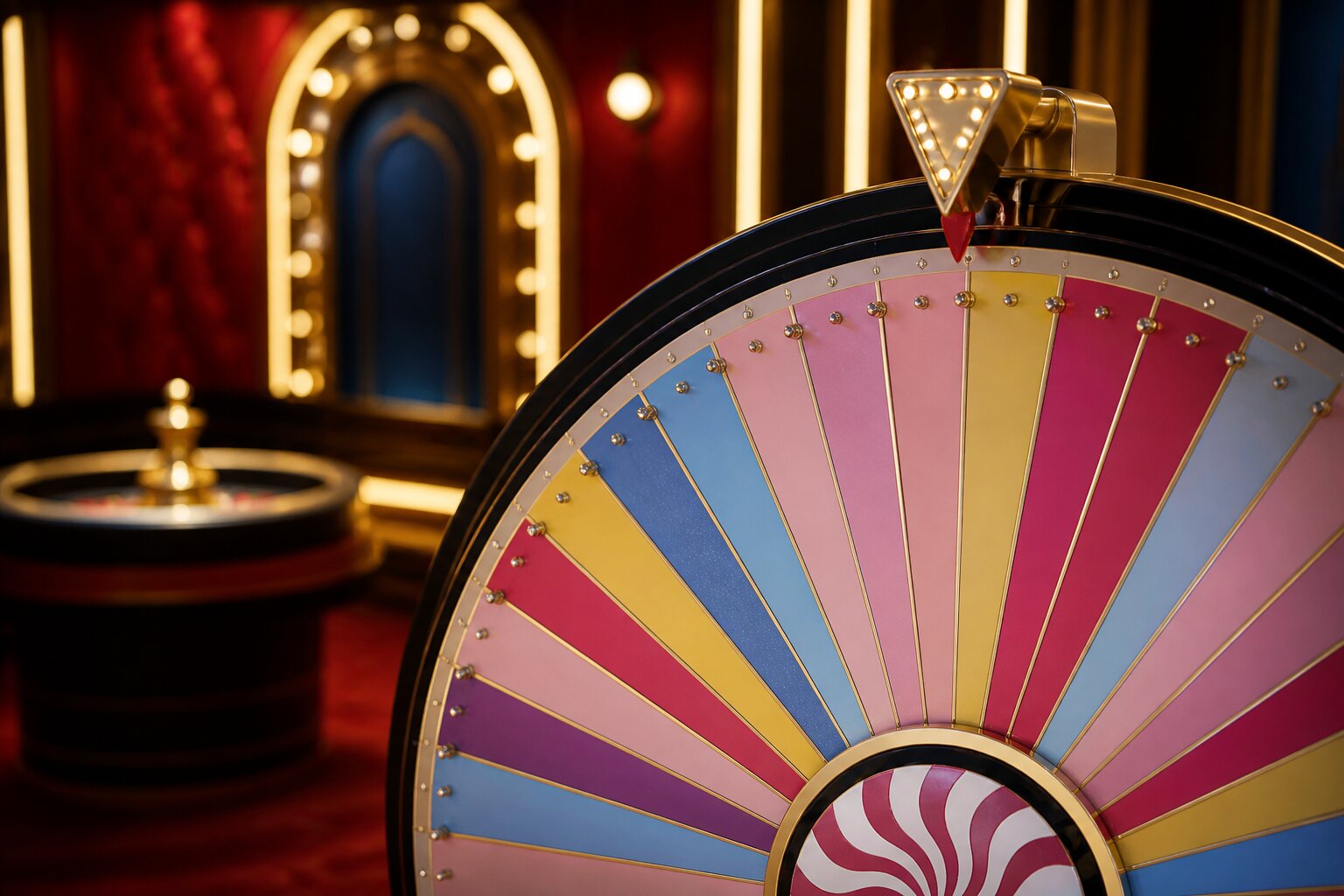
Ever watched the colourful wheel spin on Crazy Time and wondered what really decides the results? You’re not alone. With flashing lights and lively hosts, it’s easy to admire the spectacle without knowing the mechanics behind it.
Understanding how Crazy Time outcomes are produced can make your experience clearer and more confident. Whether you want to know how fairness is maintained or simply prefer to play with a better idea of how the game operates, this guide walks through each element of the show. Read on to see what happens from bet placement to payout—and what that means for your session.
Understanding How Crazy Time Works
Crazy Time is a live, studio-produced game show. At its heart is a large vertical wheel divided into 54 segments marked with the numbers 1, 2, 5 and 10, plus four special bonus sections: Coin Flip, Cash Hunt, Pachinko and Crazy Time. Players place bets on any of these outcomes before the host spins, deciding which segment they think the pointer will stop on.
Alongside the main wheel is a Top Slot — a horizontal display that can pair a multiplier with a number or a bonus, increasing the payout for that round. Bets on higher numbers pay more when successful because those segments appear less often on the wheel. Once bets are closed, the host spins and the Top Slot runs independently; when the wheel stops, the segment at the pointer determines whether number payouts occur or a bonus round starts.
The next section looks more closely at the mechanisms that generate each outcome and why the result is considered impartial, leading us into a deeper look at the wheel, the Top Slot and the bonus games.
What Determines the Outcome in Crazy Time?
Outcomes in Crazy Time arise from a mix of mechanical motion and electronic randomisation, with procedures designed to ensure impartial results. After bets close, the main determinant is the physical spin of the wheel. The wheel’s construction and mounting are engineered so each segment’s chance of being selected corresponds to its frequency on the wheel.
Running concurrently, the Top Slot produces a randomly selected multiplier or no multiplier at all. It is an independent system from the host’s spin and does not interact with player choices. When a number segment is selected, payouts follow the odds tied to that number; when a bonus segment lands, only players who bet on that bonus take part in the subsequent interactive round, where additional random processes decide further outcomes and values.
All of these elements — the wheel’s stop point, the Top Slot results and the bonus-round randomisations — are set up so no outside party can influence a result once a round begins. With that in mind, the next section outlines the wheel itself and how its segment layout shapes the game’s probabilities.
The Role of the Game Wheel and Segments
The Crazy Time wheel is the game’s visual and operational centre. It contains 54 segments with the following allocation:
1 (21 segments)
2 (13 segments)
5 (7 segments)
10 (4 segments)
Coin Flip (4 segments)
Cash Hunt (2 segments)
Pachinko (2 segments)
Crazy Time (1 segment)
Number segments deliver straightforward payouts equal to their face value, while bonus games open mini-games that can generate additional multipliers or prize allocations. Because there are many more '1' segments than 'Crazy Time' segments, a '1' result will occur more often in statistical terms. Each spin, however, is a single independent event governed by the wheel’s physics and the independent digital processes that run bonus features.
Next, we’ll consider how the live hosts fit into the picture and what they do — and do not — control during play.
Live Game Hosts and Their Influence
Hosts create the live atmosphere: they spin the wheel, explain the features, cue the Top Slot and lead players through bonus rounds. They operate to preset standards and follow regulated procedures when performing actions such as launching the Pachinko puck or revealing Cash Hunt values.
Despite their visible role, hosts cannot alter outcomes. The mechanics and electronics that determine results are separate from any human input once a round begins. Standardised protocols and oversight by independent auditors ensure the integrity of each action the host carries out. This separation helps preserve the impartiality of every spin and keeps the show-style presentation distinct from the underlying random processes.
Having covered who runs the game, the next section examines the systems that guarantee those processes are genuinely random and fair.
Is Crazy Time Fair and Random?
Fairness and genuine randomness are fundamental to Crazy Time. The game is subject to regulatory standards that require independent checks on both mechanical parts and electronic systems. These checks confirm that every round is produced without bias and that outcomes cannot be predetermined by operators or players.
Certain digital elements — notably the Top Slot and some bonus-round mechanics — depend on Random Number Generators (RNGs). These RNGs are specialised software modules that deliver unpredictable results for tasks like assigning multipliers, shuffling values or selecting prize positions in digital mini-games. The RNGs are implemented only where an electronic process is needed; the physical wheel provides real-world randomisation through its motion.
Independent testing and ongoing audits verify these systems work as intended and meet regulatory requirements. Certification and routine inspections give operators and players a documented assurance that the game behaves impartially. With that assurance in place, it’s natural to ask why sessions still look so different from one another, which we explore next.
Why Do Results Differ Between Sessions?
Session-to-session variation is a direct consequence of independent, random rounds. Each spin, Top Slot result and bonus-round resolution stands alone; there is no carry-over effect that links one round to another. Over a short stretch of play you might see several bonus rounds clustered or a sequence of number results, and a later session may show a very different pattern.
These differences reflect probability rather than any change in the game’s mechanics. The wheel’s segment allocation makes some outcomes like '1' statistically more frequent, but probability does not force those outcomes into predictable runs. That inherent unpredictability is part of the format’s appeal, and it also underlines why thinking in terms of single rounds rather than streaks is the clearest way to view results.
With this variability in mind, the next section explains how those results are presented so players can track what happened in each round.
How Are Results Displayed to Players?
Results appear on screen immediately after each spin, with the winning segment highlighted and any payout amounts shown clearly. Number wins automatically credit the player’s balance with the appropriate return and a notification confirms the transaction.
When a bonus round starts, the interface changes to guide participants through the feature with clear visuals — for example, multipliers appearing over targets in Cash Hunt or the Pachinko board showing the puck’s path. At the end of a bonus round, the display summarises the prizes awarded and updates balances accordingly.
Most interfaces also include a history panel showing recent outcomes and any Top Slot multipliers. This provides a transparent record of play so players can review how the session unfolded. The final section offers practical advice on reading those displays and understanding what they mean for your session.
Tips for Interpreting Crazy Time Results
Interpreting results is primarily about reading the on-screen information and recognising what each display element signifies. Winning segments are highlighted and accompanied by a clear payout figure. Bonus rounds use themed animations to show how prizes are allocated and to indicate when additional multipliers apply.
The round history is useful for reviewing recent outcomes, but it should be treated as a log rather than a guide to future events since each round is independent. When a bonus is triggered, the screen provides the details needed to follow the feature — such as current multipliers or the positions of targets in an interactive round — so players can see exactly how any extra value is generated.
Keep an eye on these displays to stay informed about your session, and use them to confirm results and payouts quickly and easily.
Final statement: Knowing how Crazy Time produces and presents its outcomes helps keep the experience transparent and straightforward, so players can follow each round with confidence.
Explore Casino Games at Cozino
We’re always delighted to welcome new players to our site, where you’ll find an inviting space to explore a world of entertainment. Feel free to take your time and discover what we have to offer at your own pace.
Getting set up is straightforward—just create an account, make a deposit, and you’re ready to play. We hope you enjoy your experience with us at Cozino.
**The information provided in this blog is intended for educational purposes and should not be construed as betting advice or a guarantee of success. Always gamble responsibly.