
Ever wondered how casinos spot players trying to beat the house at its own game? Card counting might sound like a plot device from a film, but in real life casinos use a mix of careful observation and technical tools to spot patterns that suggest someone has an edge.
From attentive staff on the floor to surveillance systems watching the action, operators use these measures to protect the integrity of their games. Curious about the methods used and what happens if someone is suspected? Read on to learn how detection works and how casinos balance fairness for all players.
Why Do Casinos Monitor Players for Card Counting?
Casinos monitor table games to ensure play remains fair and consistent for everyone involved. Card counting, while not illegal, can create an uneven playing field by giving some players a measurable advantage. That threatens the experience and fairness for other participants.
Operators also have regulatory duties to detect and manage advantage play, which helps maintain trust in the games offered. This regulatory focus is not about preventing wins, but about ensuring everyone plays under the same conditions and rules.
Keeping games fair supports both the operator’s responsibilities and the quality of the experience for customers. Monitoring helps prevent situations where advantage play could distort outcomes or cause disruption at the tables.
How Do Surveillance Systems Work in a Casino?
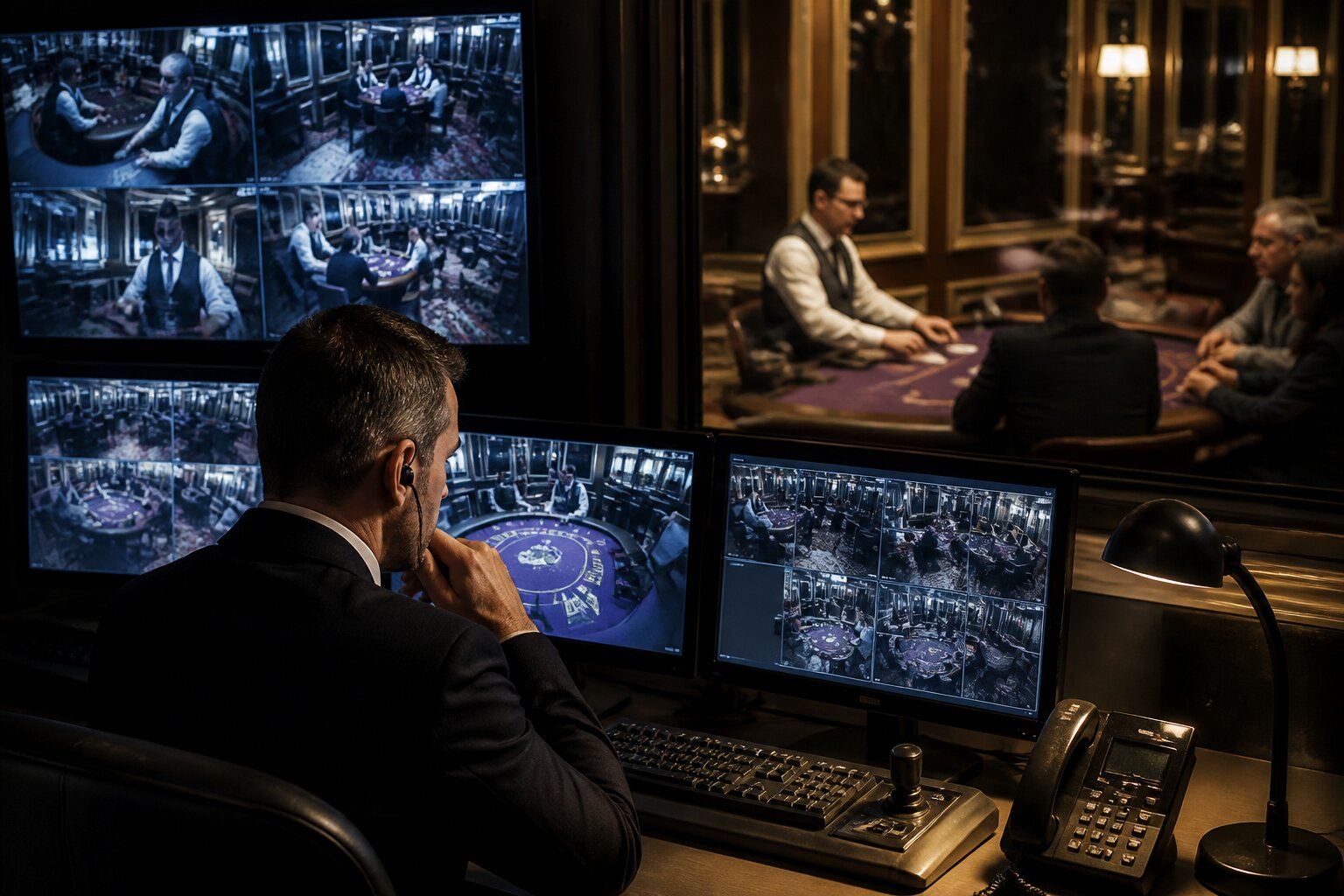
Surveillance systems are a key part of oversight on the gaming floor. They combine camera feeds, recording equipment and monitoring software to provide a continuous record of play across tables.
Trained staff review live and recorded feeds to look for irregularities in play or behaviour. These observations are used alongside floor staff reports to form a fuller picture before any action is taken.
All surveillance activity must comply with data protection and privacy rules. Recordings and any personal data are handled securely and retained only as permitted by law and regulatory requirements.
If you are wondering how this ties into staff actions at the table, the next section explains what behaviours typically attract attention.
What Behaviour Do Casinos Look For in Suspected Card Counters?
Casinos look for patterns of play that differ markedly from ordinary recreational behaviour. A common indicator is a player whose bet sizes change consistently in correlation with the cards that have been dealt, suggesting they are tracking the deck composition.
Other signals include unusually intense concentration across hands, repeated relocation to tables at specific times, or coordinated play among a small group that appears to share information. Avoiding side bets that reduce an advantage or consistently declining certain offers can also trigger closer scrutiny.
It is important to stress these are indicators, not proof. Skilled players often display focused, strategic behaviour that would not alone warrant action. Staff use these signs as a starting point for further review rather than as immediate cause for penalties.
Who Are the Key Staff Responsible for Detecting Card Counters?
Multiple roles work together to detect and assess potential advantage play. Each role has distinct responsibilities and contributes different perspectives to the detection and review process.
-
Dealers: Dealers are the first observers at the table. They notice betting patterns, timing and interaction between players. Dealers also report unusual behaviour promptly to supervisors so that any immediate risks can be managed without disrupting other customers.
-
Pit supervisors: Pit supervisors oversee several tables and bring experience in distinguishing normal skill from behaviour that merits review. They assess reports from dealers, make on-the-spot judgements about whether play should continue, and decide when to escalate concerns to surveillance or security.
-
Surveillance teams: Surveillance teams provide technical observation and can perform retrospective analysis using recordings. Their input is invaluable when staff want to verify patterns over a longer period, and they maintain footage and logs that support any subsequent enquiries.
-
Security and compliance staff: Security and compliance review findings from the pit and surveillance, ensure that actions follow internal policy and legal requirements, and manage any necessary reporting or liaison with regulators. They also keep records of incidents and outcomes.
This layered approach helps ensure that any concerns are reviewed from different perspectives before reaching a decision. Clear lines of communication, standard reporting procedures and regular training mean observations are recorded consistently and decisions are defensible, proportionate and compliant with regulatory obligations.
What Technologies Help Identify Card Counting?
Modern casinos combine human observation with technology to form a balanced detection system. Technology is used to highlight potential issues so that trained staff can carry out further review, rather than to make final judgements on its own.
Systems are designed to flag irregularities for human review. Alerts typically prompt more focused observation, additional data collection or conversation by floor staff to establish the context around any unusual activity.
All tools are used within the bounds of privacy law and applicable regulation, with safeguards around how data is stored and accessed. That balance helps keep monitoring effective while protecting customers’ rights and meeting regulatory requirements.
Facial Recognition & Player Databases
Some venues use facial recognition where permitted, linking a face to past records of behaviour if someone has been previously flagged. This can assist staff in recognising repeat visitors who may have been involved in earlier incidents or who are on various watch lists.
Databases can store notes about prior incidents, helping staff spot patterns across visits. Typical items recorded include:
- details of previous investigations or outcomes,
- observed patterns of play or behaviour that prompted attention,
- any regulatory actions or venue restrictions applied previously.
Storage and use of such data are governed strictly, and access is limited to authorised personnel for regulatory and security purposes. Retention periods and access controls are set to comply with data protection rules and to ensure information is handled appropriately.
Analysing Betting Patterns
Software can aggregate bet sizes and timing across sessions to reveal statistical anomalies. By collecting data over many hands or visits, systems can identify trends that would be hard to see in real time.
By comparing a player’s behaviour against baseline patterns for a game, analysts can detect shifts that might indicate advantage play. Examples of the kinds of anomalies that trigger further review include changes in:
- bet size relative to expected limits,
- timing of bets or decisions compared with typical play,
- frequency of raised or lowered stakes in response to changing game conditions.
These analytical tools create leads for human staff to investigate, rather than replacing judgement. The combination of data analysis and floor observation provides a more reliable assessment than either approach alone, supporting proportionate and fair responses.
How Do Casinos Respond When Someone Is Suspected?
When concerns arise, the response is deliberate and proportionate. Staff review available footage and records to confirm whether the indicators are consistent over time and across hands.
If further checks are required, a polite request for identification may be made to verify age and identity, as this also helps ensure records are accurate. Where appropriate, staff may implement measured controls such as restricting bet sizes at a particular table to maintain fairness for others.
Any measures taken are documented and based on established procedures; the emphasis is on resolving issues discreetly and professionally while preserving the dignity of the player.
Can Casino Detection Methods Ever Fail?
No detection system is infallible. False positives can occur when strong, legitimate play resembles patterns associated with advantage play. Players who are highly skilled, disciplined, or simply lucky for a period can trigger alerts that mirror those raised by cheating or collusion.
Conversely, sophisticated methods of advantage play may sometimes evade detection. New techniques, subtle team play, or determined individuals exploiting gaps in surveillance and data analysis can slip through until systems are updated.
To reduce these risks, casinos rely on layered checks and cross-referenced evidence before taking action. These typically include:
- statistical and behavioural analysis from surveillance and card-tracking systems
- manual review of video footage by experienced staff
- cross-referencing incident reports, floor observations and electronic logs
Reviews are deliberate and aim to avoid incorrect accusations. Investigations often take time, involve multiple staff members, and seek corroborating evidence before any formal step is taken. Where doubts remain, staff will often favour further monitoring rather than immediate punitive measures, allowing more data to be gathered and patterns to emerge.
Open communication with customers is important if concerns arise, so queries can be addressed and records clarified. Guests who believe they have been unfairly identified are usually encouraged to speak to management, who can explain findings, outline next steps, and provide details of the venue’s complaints or appeal procedures.
Common Myths About Card Counter Detection
A few persistent myths clutter public understanding. One is that decisions rest on instinct; in practice, actions follow documented evidence and internal procedures. Another is that any player having a good run will be targeted; recreational streaks and skilled play are not treated the same as systematic advantage play.
There is also a misconception that casinos maintain broad, permanent records of everyone’s play for unspecified uses. In reality, data collection and retention are governed by law and used only for compliance, security and legitimate operational needs.
Clearing up these misconceptions helps set realistic expectations about how casinos manage fairness and oversight.
What Are the Consequences of Being Caught Card Counting?
When a player is found to be engaging in systematic advantage play, venues apply measured, professional responses consistent with regulation and internal policy. The focus remains on maintaining fair play and protecting other customers’ experience.
Warnings
Often the first response is a clear, professional warning that certain behaviour is under review. This gives the player an opportunity to adjust their approach and lets staff document the incident.
Refusal of Service
If the behaviour continues or if there is a pattern of repeat incidents, an operator may restrict access to specific games or, in some cases, refuse service. Such measures are applied consistently and recorded to ensure transparency and accountability.
Whatever action is taken, it is carried out with respect for the person involved and in line with legal obligations and internal standards.
Final statement: Casinos use a careful mix of staff observation, technology and measured policies to protect game integrity; when concerns arise the response is evidence-led, proportionate and designed to keep play fair for everyone.
**The information provided in this blog is intended for educational purposes and should not be construed as betting advice or a guarantee of success. Always gamble responsibly.