
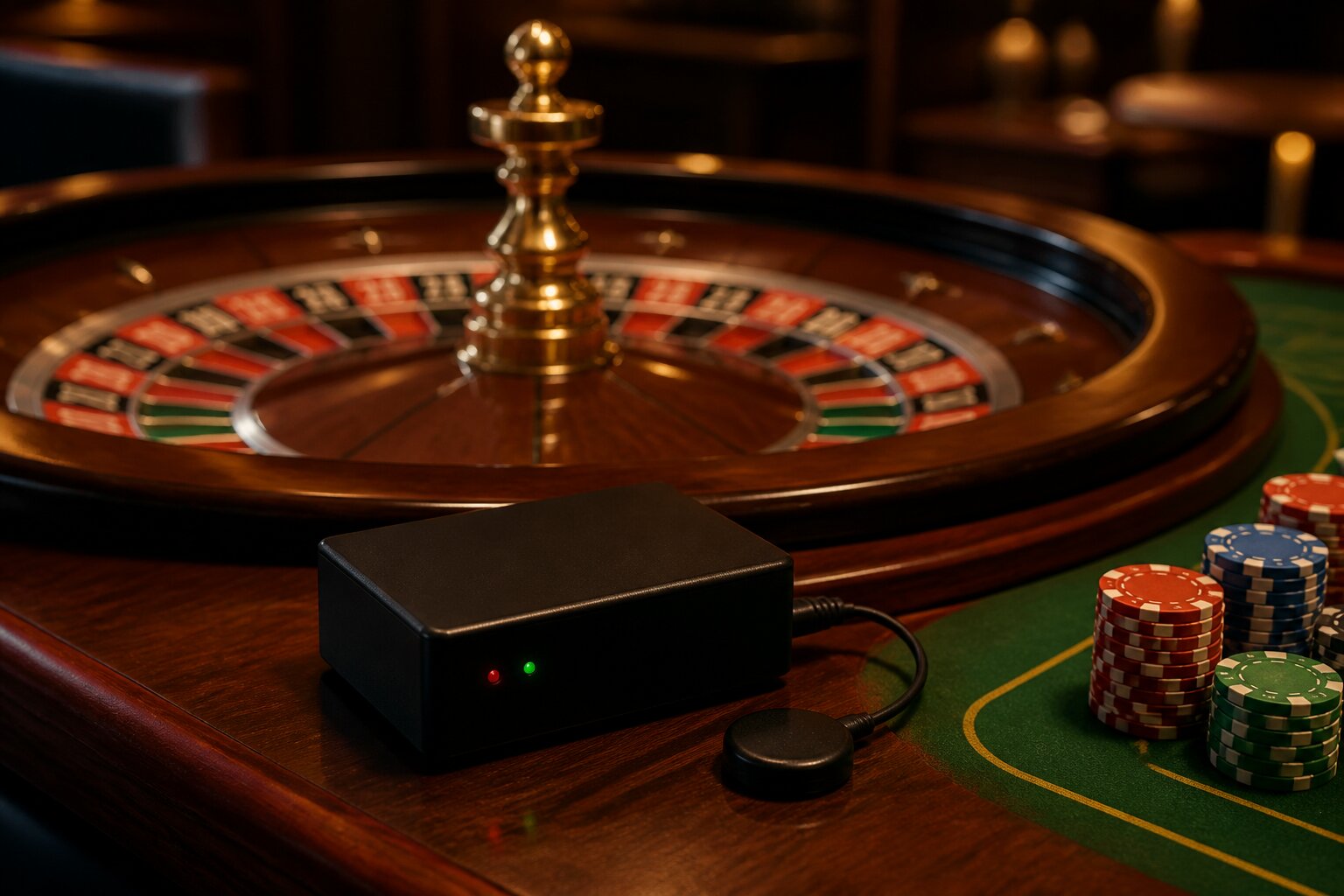
The world of casino gaming is packed with myths, mysteries and the odd legend about ways to beat the house. Among the most intriguing is the idea of a "roulette computer prediction device"—a gadget that claims to predict the outcome of a spin.
With promises of big wins and cutting-edge technology, these devices have grabbed the imagination of many. But do they really work, or are they clever marketing? Read on to separate fact from fiction and discover what these machines can — and cannot — do.
What Is a Roulette Computer Prediction Device?
A roulette wheel computer prediction device is a small electronic gadget that attempts to estimate where the ball will land on a roulette wheel. Typically, it measures or records timing information about the wheel and ball, then runs calculations to suggest a likely betting zone.
Some versions have been concealed inside everyday items so a user can operate them discreetly. The device often signals the suggested area via a vibration, a light or a tiny display. Behind the marketing, the basic idea is to use timing and physics to narrow down where the ball might stop.
Using any unauthorised electronic device to influence or predict gambling outcomes is illegal in licensed venues. That legal risk is one reason why this subject attracts as much caution as curiosity.
How Do Roulette Prediction Devices Operate?
These devices are built around timing and motion data. As the wheel spins and the ball travels around the rim, the operator inputs moments such as when the ball passes a fixed point or when the wheel completes a rotation. The device then converts those inputs into speed and deceleration figures and applies simple physics to estimate a landing sector.
Feedback is quick, designed for use in the brief window between the spin and when place bets. Users rely on subtle signals to place bets in the predicted area. In practice, the effectiveness depends heavily on measurement accuracy and the consistency of the wheel.
Casinos counter this by maintaining wheels to tight tolerances and by varying conditions that would otherwise produce predictable patterns. That means the inputs a device uses can be unreliable from spin to spin, making consistent predictions extremely difficult.
If you’re curious about the mechanics, it’s the combination of real-time observation, short calculation windows and practical constraints that shapes how these devices operate.
Are Roulette Computer Devices Legal in Casinos?
The answer is straightforward: using them in licensed venues is prohibited. UK regulations forbid equipment that interferes with games or gives a player an unfair predictive advantage. Casinos treat such devices as cheating, and detection can lead to immediate removal and further sanctions.
Legal frameworks and venue rules aim to protect the fairness and integrity of play. Because of this, anyone considering these devices risks far more than a failed experiment; the consequences include bans, loss of winnings and possible legal action.
While the technical debate about how well the devices work can be interesting, the legal context makes clear that they have no place on the gaming floor.
How Accurate Are Prediction Devices in Practice?
Independent testing and expert analysis show that consistent accuracy is rare. In controlled laboratory conditions, limited prediction success can sometimes be demonstrated, but real casino environments introduce variables that erode reliability.
Factors such as minute variations in wheel level, table wear, differences in ball behaviour and dealer technique all disrupt the measurements devices depend on. Wheels are also subject to regular maintenance and inspection to prevent persistent biases. Given those safeguards, any short-term success seen by a device is unlikely to repeat in the long term.
For most players, then, these gadgets do not offer a dependable way to improve outcomes. They are fragile systems in the face of small, real-world changes.
Common Myths About Prediction Devices
Several misunderstandings circulate about how effective and legal these devices are. One widespread claim is that they can guarantee wins; this overstates what timing-based systems can deliver. Another myth suggests casual or private use avoids legal consequences—but the rules apply in licensed gambling environments regardless of intent.
Some say casinos cannot detect these devices. In fact, modern surveillance and trained staff make detection increasingly likely. And while online forums may present anecdotal success stories, official sources and independent studies provide a much clearer picture of limitations and risks.
Separating marketing claims from tested performance helps clarify what’s plausible and what’s unlikely.
Do Casinos Detect and Prevent These Devices?
Yes. Casinos combine vigilant staff observation, CCTV review and technical scanning to spot suspicious behaviour or unauthorised electronics. Security teams are trained to notice telltale actions such as rhythmic tapping, concealed transmitters or unusual communication devices, and to follow established procedures when they suspect cheating.
Many venues use plainclothes staff alongside uniformed officers so suspicious conduct can be observed discreetly without disturbing other guests. Operators also invest in ongoing training for dealers and floor staff so they can identify subtle patterns of play that may indicate the use of an illicit device.
Beyond human observation, some casinos deploy equipment that detects radio frequencies or other signals emitted by covert gadgets. Technical measures may include periodic sweeps of gaming areas and secure storage for electronic devices found on the floor.
When suspicious activity is confirmed, operators enforce rules promptly and document the incident carefully. Typical responses include:
- removing individuals from the gaming area,
- confiscating devices and preserving them as evidence,
- notifying regulatory bodies or law enforcement where appropriate.
These measures reflect a broader effort to ensure games remain fair for everyone on the floor. Operators must also comply with licensing conditions and local laws, and they often work with manufacturers and regulators to stay ahead of new threats.
Ethical and Practical Implications for Players
Trying to gain an unfair edge raises ethical questions about fairness and respect for other players. It undermines the spirit of fair play and can damage trust at the table or in the online community. That breakdown in trust affects everyone who plays, not just the person involved.
The practical consequences are significant too. Being caught can lead to:
- loss of funds
- account closures
- bans from licensed venues
Those outcomes can affect future access to gambling services and your standing with operators. In some cases, serious incidents may also lead to legal or civil action, depending on the jurisdiction and the nature of the behaviour.
There is also a reputational cost. Casinos and operators share information about confirmed cheating incidents, and being linked to that can have long-lasting effects on personal and professional relationships.
Playing within the rules protects personal finances and reputations, and supports an environment where everyone can expect fair treatment. It also helps maintain a safer, more transparent gaming sector that licensed operators are required to uphold.
Conclusion: Are Roulette Prediction Devices Worthwhile?
Weighing the technical limits, legal restrictions and practical risks, these devices are not a sensible option for people who want to enjoy casino games safely and lawfully. The combination of unpredictable real-world factors and active countermeasures by venues makes reliable, repeatable performance unlikely.
If you play roulette, treating it as entertainment and staying within the rules is the surest way to avoid trouble. Keep your focus on the experience rather than on tools that promise easy gains, and seek help if gambling ever stops being a controlled, enjoyable pastime.
**The information provided in this blog is intended for educational purposes and should not be construed as betting advice or a guarantee of success. Always gamble responsibly.