
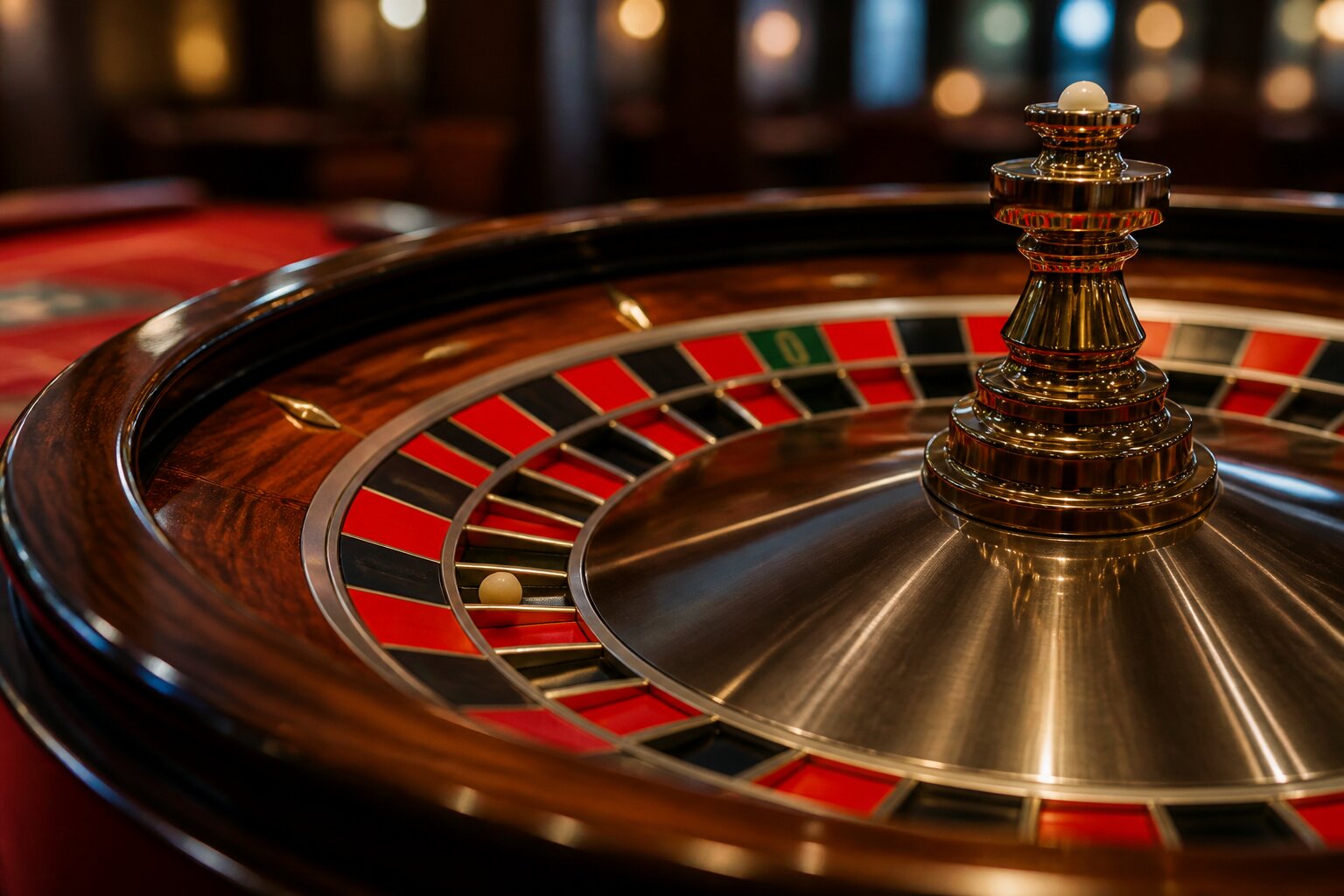
Ever wondered what really makes up that spinning wheel on a roulette table? If you’ve watched the ball circle the pockets, you might have noticed how the numbers and colours shape every outcome.
This article explains exactly how many pockets different roulette wheels have, what those numbers mean, and how roulette differs from other casino games. Read on to get a clearer picture of how the wheel is built and what to expect at the table.
Differences Between European and American Roulette Wheels
Roulette wheels come in two common forms, and the difference is simple but important. A European-style wheel has 37 pockets labelled 0 to 36. An American-style wheel has 38 pockets, because it includes both a single zero (0) and a double zero (00).
Beyond the extra pocket, the layout and colouring are arranged so numbers alternate between red and black, with the one or two green zero pockets set apart. That single additional pocket on the American wheel slightly alters the mathematical structure of bets and the table layout, so players often notice different odds and payout patterns between the two versions.
Before you join a table, glance at the wheel and the betting board to confirm which version you’re about to play. Knowing this detail helps you understand how the game is organised and what to expect from the bets available.
What Do the Numbers on a Roulette Wheel Mean?
Each numbered pocket corresponds to a specific outcome for a spin. The main set runs from 1 to 36, split evenly between red and black, while the zero pockets are green. Those labels are simply identifiers: they let players place bets on a single number, groups of numbers, colours, or other betting combinations.
Numbers themselves do not carry any extra meaning beyond marking a pocket. For example, a player may cover a set of adjacent numbers on the table layout to form a group bet, or back a single number with a larger stake for a higher payout. The arrangement of numbers around the wheel is designed to spread high and low numbers along the circumference rather than cluster them, which affects how the physical wheel looks but not the fairness of any single spin.
If you’re curious about how different bets pay, check the table’s payout chart. That shows the trade-off between the size of a payout and the range of outcomes it covers.
Are All Numbers Equally Likely in Roulette?
In a properly maintained wheel and regulated game setting, each pocket is treated as an equally possible outcome for every spin. The mechanics of the wheel and ball are intended to produce a fresh outcome each time the wheel is spun, so no particular number is expected to appear more often as a consequence of previous spins.
Online versions use certified random number systems to replicate that unpredictability, ensuring each result is independent from the last. This independence means players should not rely on past results to infer future ones.
If you want to manage how you play, look for operators that include player controls and information about game fairness. Those tools help you stay informed about the rules and structure without implying any predictable pattern to results.
How Are Slot Machines Different From Roulette?
Slot machines and roulette share a casino environment but operate in very different ways. Slot machines are self-contained: a player spins reels that display symbols and the machine determines outcomes internally. Payouts are tied to symbol combinations and machine-specific rules.
Roulette is a table game with a visible wheel and a ball. Players make bets on numerical or colour-based outcomes before the wheel is spun, and multiple players can participate in the same round. The social element and visible physics of the wheel give roulette a distinct presentation compared with the solitary, symbol-driven pace of slots.
Both formats use predefined rules and payout structures, and both can include variations that change bet types, side wagers, or bonus features. Choosing between them usually comes down to personal preference for interaction, pacing, and the kinds of bets you enjoy.
Common Myths About Roulette Wheels and Slots
There are several persistent misconceptions about how roulette and slot machines work. Clearing these up helps you understand what to expect and avoid relying on inaccurate ideas.
Myth 1: Certain Numbers or Slots Are ‘Due’ a Win
Some people believe a number that has not appeared recently is more likely to come up soon. In reality, each spin is independent, so prior outcomes do not alter the probability of any specific pocket appearing on the next spin.
Myth 2: Gambling Systems or Rituals Can Influence Results
Betting patterns or personal rituals do not change the underlying mechanics of a game. Whether you favour one staking method or another, the mathematical structure and game rules determine payouts, not routines or superstitions.
Myth 3: Machines or Wheels Can Be ‘Hot’ or ‘Cold’
Labels like hot or cold suggest a machine or wheel can be in a state that affects future outcomes. Since each round is independent and governed by the game’s rules, operators and equipment do not produce streaks that alter probabilities.
If you want to keep play enjoyable and within your means, check for available account controls and limit-setting tools. They help you manage time and spending without assuming any system will change how results occur.
**The information provided in this blog is intended for educational purposes and should not be construed as betting advice or a guarantee of success. Always gamble responsibly.