
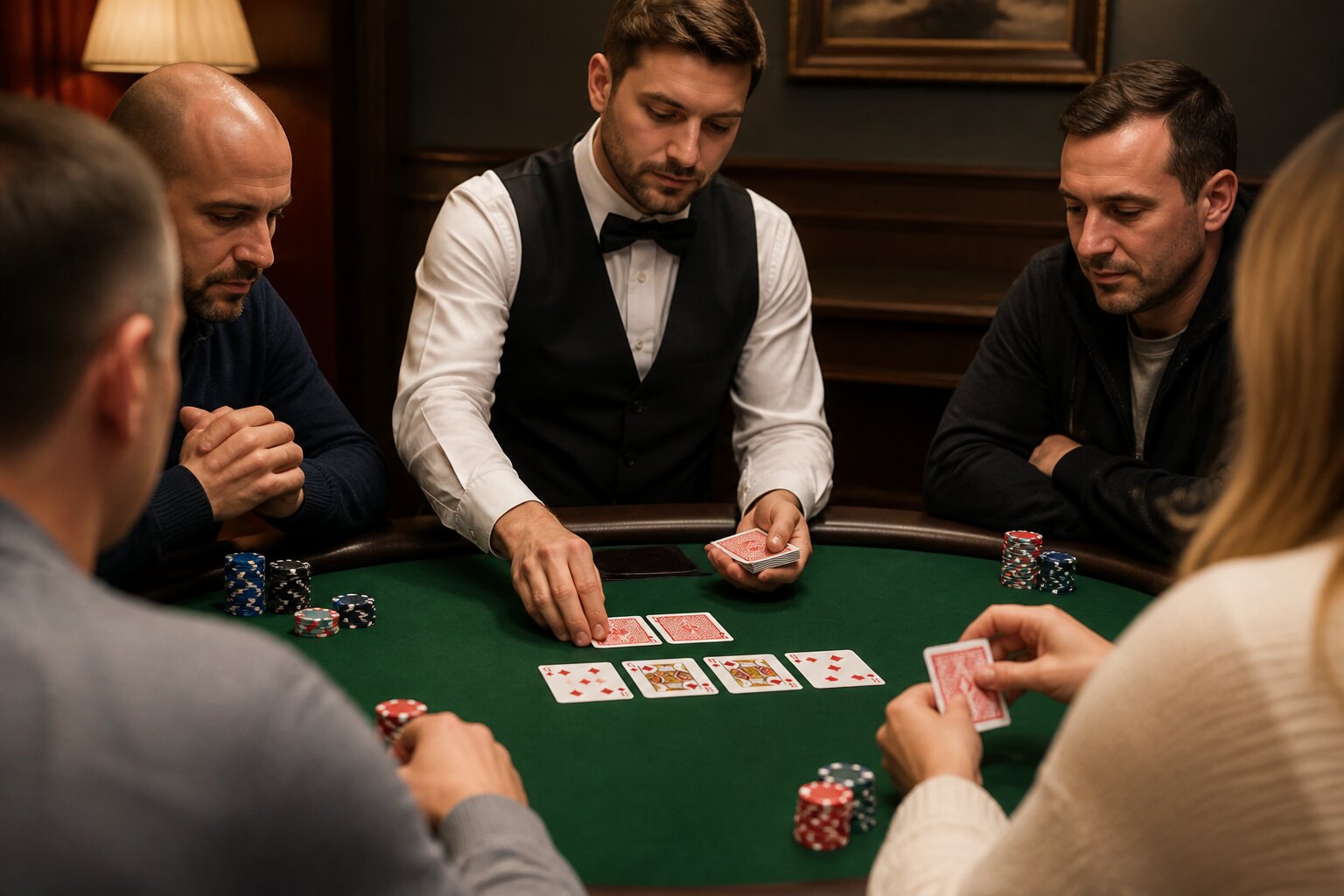
Ever wondered what sets a true poker dealer apart from the rest? There’s more to the role than simply shuffling and dealing cards. A skilled mechanic dealer keeps a game moving with precise technique, clear communication and steady composure.
If you’re curious about the craft behind dealing — whether to appreciate the table as a player or to consider dealing yourself — this guide explains the key responsibilities, the practical skills to develop, and the card handling methods that keep play fair and efficient.
Read on to learn what a mechanic dealer does, how they do it, and what it takes to reach a professional standard.
What Is a Mechanic Dealer in Poker?
A mechanic dealer is someone with advanced card handling and game-management skills. In both commercial venues and friendly private games, this name describes a dealer who shuffles, deals and runs a table with speed and accuracy.
The term has sometimes been associated with sleight-of-hand, but here it refers only to legitimate, ethical practice. In regulated settings dealers follow clear procedures that promote fairness and transparency; every action is visible at the table so players can see the deck is handled correctly.
Essentially, a mechanic dealer is a highly trained professional whose expertise keeps the game smooth, reduces errors and supports a trustworthy playing environment.
Essential Roles of a Mechanic Dealer
At its core, the job is about managing the flow of the game. A dealer ensures each hand is dealt correctly, manages the pot and makes concise announcements so players understand the current betting round.
They also monitor for rule breaches or irregularities, stepping in to clarify disputes or correct mistakes when needed. Handling chips and maintaining an accurate pot are part of the task, as is ensuring cards are kept visible and dealt without exposure.
Professionalism and impartiality are central: the dealer treats every player consistently and follows the venue’s operating procedures, which are designed to protect the integrity of each game.
Transitioning from responsibilities to the traits that enable them, the next section breaks down the specific skills that underpin this work.
Key Skills Every Mechanic Dealer Should Have
Dexterity and hand-eye coordination make routine tasks—like shuffling and cutting—seem effortless. A dealer’s hands must be precise, especially during busy games where speed and clarity matter.
Attention to detail helps prevent errors such as misdeals or incorrect chip counts. Being able to spot small irregularities quickly protects the game and avoids disputes.
Clear communication keeps play moving: concise, audible announcements about bets and card stages reduce uncertainty and keep all players informed. Equally important is the ability to stay calm under pressure; lively tables can be stressful, and steady composure helps maintain order.
Finally, commitment to ongoing training ensures a dealer’s technique and rule knowledge remain current. Regular practice and refreshers on procedure make the difference between a competent dealer and a trusted professional.
What Card Handling Techniques Do Mechanic Dealers Use?
Card handling techniques are chosen to preserve fairness and to make every action clear to the table. Dealers use a combination of shuffles, cuts and dealing motions designed to randomise the deck and avoid accidental exposure.
These methods are performed openly and consistently so players can follow what’s happening. Proper technique reduces the chance of misdeals, keeps card backs aligned and ensures cards are delivered face down and unmarked.
Next, we look at the main shuffling and dealing methods you’ll see in play and how they contribute to a properly run game.
Proper Shuffling Methods for Mechanic Dealers
Effective shuffling mixes the deck thoroughly and is done where everyone can watch. Common approaches include the riffle shuffle, which interlaces two halves of the deck, and spreading the cards on the table to mix them before gathering them back together. A cut is typically performed at the end, sometimes by a player for added transparency.
These procedures stop predictable patterns from forming and show that the deck has been treated fairly. Dealers keep movements smooth and deliberate so that the process appears uniform from hand to hand.
The Art of Dealing Cards Smoothly and Fairly
Dealing is about controlled motion and consistent spacing so each player receives the correct number of face-down cards without delay. Smooth delivery prevents accidental flashes of card faces and maintains the tempo of the game.
Practice builds the confidence to shuffle, cut and deal rapidly while avoiding mistakes. When a dealer’s technique is steady and visible, it reassures players that the game is being conducted properly.
Common Misconceptions About Mechanic Dealers
Many people assume advanced card skills imply dishonest intentions, but most professionals use their talents to support fair, transparent play. In regulated environments, dealers follow strict rules that prevent manipulation and prioritise an even-handed experience for everyone.
Another misconception is that dealer training centres on trickery. In fact, instruction focuses on procedure, accurate dealing, customer interaction and adherence to legal standards. These checks and balances are in place to protect the game and the players.
If you ever wonder whether a dealer is trustworthy, observing open, consistent handling and clear, impartial decisions is a reliable way to tell.
That said, recognising what professionalism looks like helps when you’re deciding where to play or whom to trust at the table.
How to Recognise a Professional Mechanic Dealer?
A professional dealer acts with calm assurance and makes every move visible, from shuffling through to final pot settlement. Their motions are precise, and they correct errors quickly and politely when they occur.
Fair treatment of players and consistent enforcement of rules are clear markers of competence. Transparency in handling cards and chips reassures players that there is no hidden activity at the table.
When choosing where to play, prefer venues that display clear regulatory oversight and staff identification; these measures indicate that the operator and its staff are held to recognised standards.
If you’re ready to learn more about becoming a dealer, the next section outlines what to focus on to get started.
Tips for Aspiring Mechanic Dealers in Poker
Entering this role means combining practical skill with professionalism. Solid training establishes technique, while repeated practice builds the speed and consistency needed at busy tables. Seek out reputable training programmes and spend time refining basic shuffles, cuts and dealing motions until they are second nature.
Developing good customer skills is equally important. A dealer shapes the atmosphere at the table through clear announcements, polite interactions and the ability to defuse misunderstandings without escalating them.
Understanding and meeting regulatory requirements is part of the job. Employers will expect age eligibility, verification of identity and compliance with venue policies. Staying informed about rules and procedural changes protects both dealers and players.
Above all, approach the role as a service position: your competence and professionalism create a fair, well-managed game that players can enjoy with confidence.
Final note: with the right training and attitude, dealing can be a respected and rewarding way to be involved in poker, whether you pursue it professionally or simply enhance the quality of home games.
**The information provided in this blog is intended for educational purposes and should not be construed as betting advice or a guarantee of success. Always gamble responsibly.