
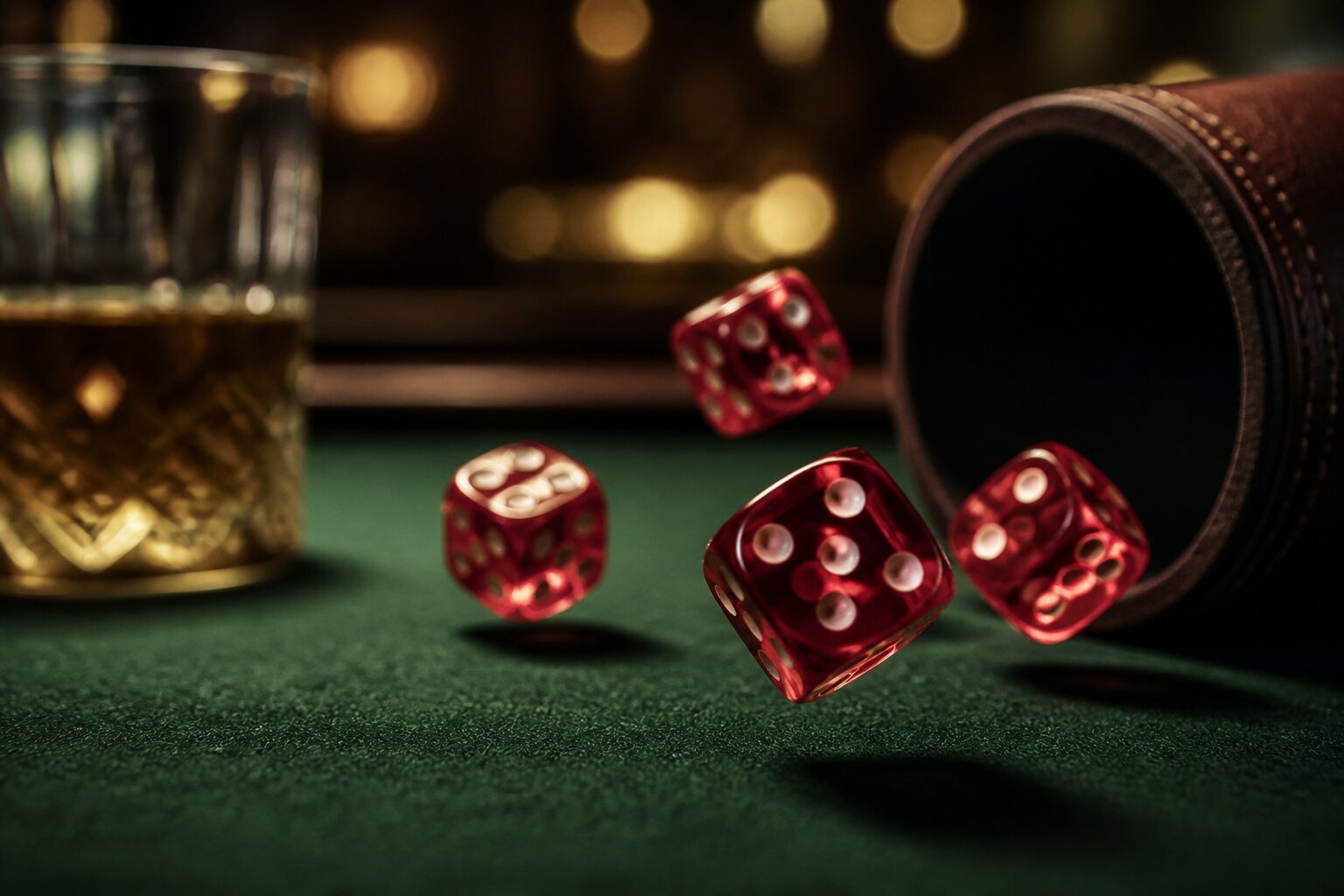
Ever wondered why some dice rolls in casinos and board games have unusual names? From “snake eyes” to “boxcars”, dice have inspired a wide range of nicknames used by seasoned players and casual gamers alike.
These terms add colour and a sense of tradition to every throw, turning a simple result into something memorable. Keep reading to learn what the common names mean, where they came from and how they vary around the UK — and whether any of this jargon might crop up the next time you play.
Popular Dice Roll Nicknames in the UK
Certain nicknames have become widely recognised across the country, especially in games that use two six-sided dice. “Snake eyes” is one of the most familiar, meaning a roll of two ones; the two single pips resemble a pair of staring eyes. At the other extreme, “boxcars” refers to double sixes, with the parallel rows of pips likened to the sides of old freight carriages.
Other terms such as “hard ten” for double fives, “midnight” for a twelve, and “Little Joe” for double twos are also used at tables and in pubs. Some names are closely tied to specific games like craps, while others come from local play or informal social settings. These nicknames help players quickly identify outcomes and add a layer of shared language to the experience.
If you want to move beyond the most famous labels, the next section expands on other common phrases and the combinations they describe.
Common Slang for Numbers and Combinations
Beyond the headline terms, a range of phrases describes particular totals and pairs. “Acey-deucey” names a one-and-two combination, its rhyme making it easy to remember in fast play. “Hard six” and “hard eight” indicate doubles—two threes and two fours respectively—whereas “soft” versions of those totals can come from mixed numbers. Calling a roll “natural” is sometimes used where a particular total is an automatic success in a betting context.
Groups and games often invent their own shorthand for convenience or humour, so you may hear different words for the same result. That variety is part of the appeal: it gives each table its own tone and lets players refer to outcomes quickly without lengthy explanations.
Snake Eyes, Boxcars & Other Famous Terms
Some nicknames have reached near-legendary status because they are so widely used. “Snake eyes”, “boxcars” and “Acey-deucey” are instantly recognisable in many circles, and their vivid imagery helps the names stick in the memory. These short, punchy terms are easy to say and recall, which is why they travel well across different groups of players.
Historic associations from early 20th-century games and American casino slang have fed into the UK vocabulary, producing terms that travellers or long-standing players will recognise when they hear them. Many of these expressions were spread by films, novels and word of mouth, so they often carry a sense of atmosphere as well as meaning. That background can make them feel familiar even to people who do not use the terms themselves.
Occasionally the same word has different local meanings, so it is worth listening for context the first few times you encounter a new expression. Regional twists can change the shade of meaning, or attach a slightly different connotation, so paying attention will help you pick up those differences quickly. Over time, hearing the terms in use will make their subtleties clearer and easier to remember.
Pairs, Doubles and Unique Combinations
Pairs and doubles attract a lot of named terms because they are visually distinct on the dice and often carry particular meaning in game rules. Double threes might be called “hard six” in one setting and something else in a social game. Some combinations have playful names based on rhymes or cultural references, and others are straight descriptions used for clarity.
Because doubles can carry specific payouts or effects in certain games, clear terminology helps keep action moving at the table. Players and dealers alike benefit from concise names that reduce confusion and speed up decisions. The language around pairs therefore serves a practical purpose as much as an entertaining one.
Beyond utility, these names can become part of a game's culture, turning simple outcomes into memorable moments. Casual groups may invent their own labels that stick, while organised play tends to favour standard terms so everyone understands the rules. In both cases, the terms add a layer of character to otherwise ordinary combinations.
How Is Dice Roll Jargon Used at the Table?
At a busy table, shorthand saves time and makes outcomes obvious to everyone present. Dealers, croupiers and players use nicknames to confirm results quickly, to call attention to a notable roll, or to share a lighthearted moment after a dramatic throw. The language also creates a social atmosphere; regular players often adopt and pass on preferred phrases, which helps newcomers settle in.
Words matter in this setting because they carry both meaning and tone — a shouted phrase can be celebration, commiseration or simply part of the routine. The next section looks at how this vocabulary changes across different parts of the UK.
Regional Variations in Dice Roll Slang
Local customs shape the jargon you’ll hear in different places. In parts of northern England, older pub games have left a legacy of terms that might not be recognisable elsewhere. Scotland and Wales show regional twists, and major cities can mix local, national and international phrases thanks to diverse communities.
These regional differences reflect local culture as much as game rules. They can also produce tiny linguistic treasures — names that survive in a neighbourhood long after they’ve vanished elsewhere. Exploring those localisms adds depth to the wider picture of dice slang and leads naturally into the historical side of where these names come from.
What Are the Origins of Dice Throw Nicknames?
Origins vary. Some names are plainly descriptive, others rhyme or reference popular culture from earlier eras, and some migrated from American gaming scenes into British use. “Snake eyes” is visually derived, while terms like “Little Joe” likely owe something to rhyming slang and period phrases. Casinos, travelling players and printed gaming guides all helped spread particular words more widely.
Many names emerged at a time when gambling culture and popular entertainment overlapped, so references to trains, performances and regional speech patterns are common. The result is a patchwork of etymologies — some clear, some folk-lore — that together form the vocabulary seen at tables today. The next part compares how this jargon functions in casinos versus home games.
Dice Roll Nicknames in Board Games vs. Casino Games
In casinos, especially at games with formalised rules, terminology tends to be stable and widely understood. Dealers and experienced players use established names so the game proceeds smoothly and disputes are minimised. Because casino play often involves many people and a professional overseeing the table, there is an incentive to stick to clear, commonly accepted phrases rather than inventing new slang on the spot.
In home or casual board-game settings, language is more fluid: groups invent their own terms, revive forgotten phrases, or avoid slang entirely in favour of plain numbers. Social familiarity and a relaxed atmosphere encourage playful or context-specific nicknames, and those names can change from one group to another or evolve over time. Casual settings also allow for humour and in-jokes, which helps unusual or personal terms stick within a circle of friends.
That flexibility makes home games fertile ground for new nicknames to emerge. At the same time, some casino terms have crossed over into casual play, creating a shared pool of phrases that many players recognise regardless of setting. The result is a mix of formal and informal language: players often switch between clear, conventional terms and more creative or nostalgic nicknames depending on the audience and the mood of the game.
Unusual and Rarely Heard Dice Terms
A few terms survive mainly as curiosities. “Ballerina” for two twos plays on the rhyme with tutu, and “sixie from Dixie” is an old expression for a five-and-one combination that surfaced in mid-20th-century circles. Other phrases, borrowed from American slang, occasionally appear in the UK but rarely stick around, slipping away as fashions and local speech change.
These rarities reveal how playful people have been with dice language over time. Hearing one of them at a table is a reminder of the game’s long social history, the informal jokes players used to make, and the small regional or historical pockets where particular names endured.
They also show how terms can cross borders and eras without becoming standard. A quirky name may survive only in memory, in an old rulebook, or among a few enthusiasts who keep the phrase alive for the sake of tradition.
Why Do Dice Rolls Have So Many Nicknames?
The sheer number of nicknames reflects how social play has been across time. Players invent terms to save words in noisy settings, to make results more vivid, or to create a sense of belonging. Cultural influences, rhymes and imagery all contribute, with different groups favouring different references.
Beyond practicality, the nicknames add personality to games and connect players across generations. At the same time, it’s worth keeping the purpose of play clear: these names are part of the social experience rather than the reason to play. With that in mind, enjoy the language, listen for local twists and let the jargon enhance the company and conversation at the table.
**The information provided in this blog is intended for educational purposes and should not be construed as betting advice or a guarantee of success. Always gamble responsibly.