
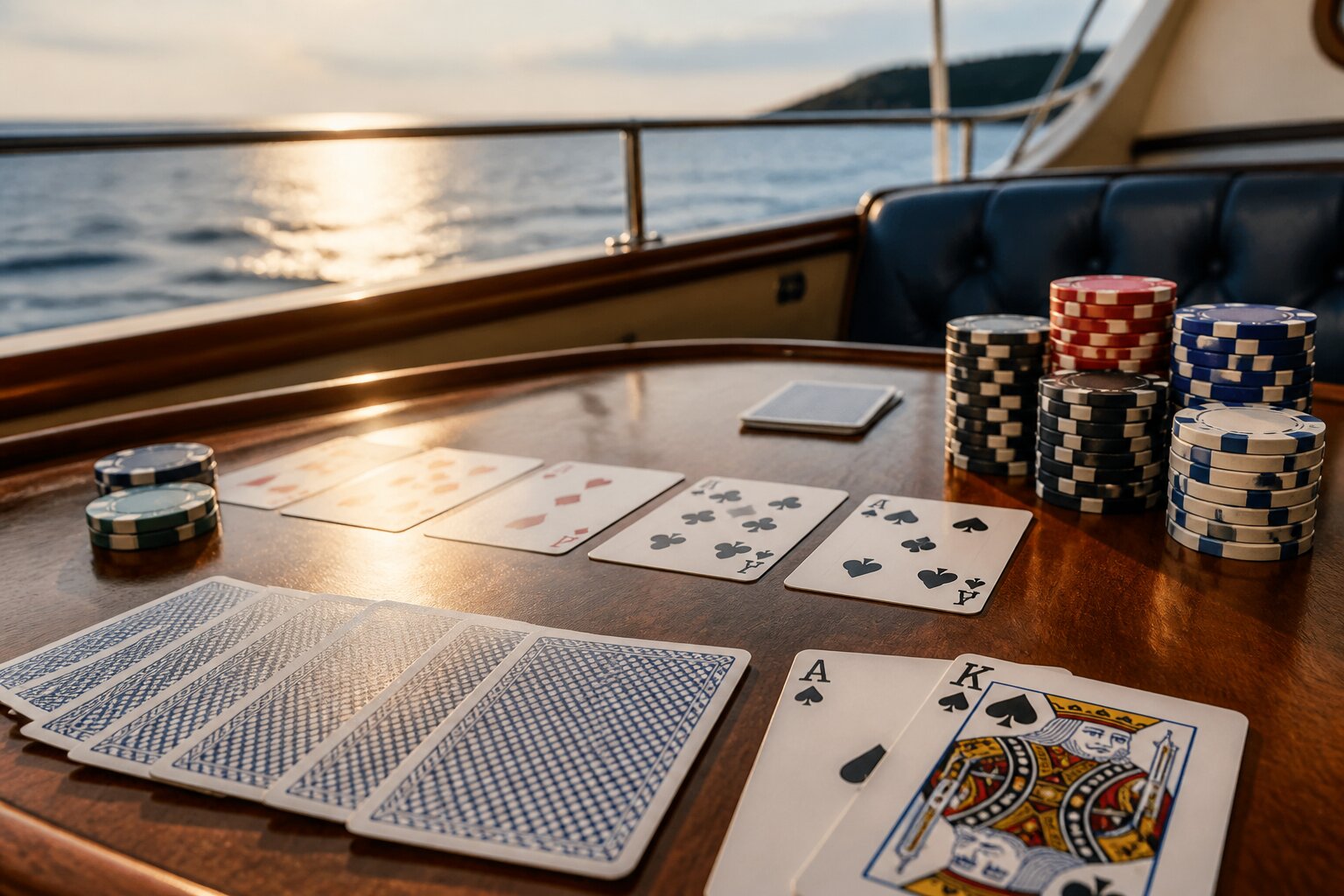
Ever wondered what a "boat" actually means when you're sitting around the poker table? Or where this quirky term comes from in the first place?
Poker is full of distinctive words and stories that add colour to the play. From friendly home games to televised events, "boat" is a term you are likely to hear — but its meaning and history are worth a closer look.
In this post we explore the meaning of "boat", trace its origins, and see how the term is used today. Read on to get the full picture and some useful examples.
What Does "Poker Boat" Mean in Card Games?
In poker, a "boat" is simply another name for a full house. That means a hand made up of three cards of one rank and two cards of another. For example, three Queens and two Jacks is a full house — a boat.
This hand appears across variants such as Texas Hold’em and Omaha. It ranks above a flush and a straight, but it is beaten by four of a kind and straight flushes. When two players both have a full house, the rank of the three-of-a-kind portion decides the winner: e.g. three Kings with two Threes outranks three Queens with two Aces.
Players use the word to name the hand quickly at the table or in conversation, and it serves as shorthand for a particular combination rather than any broader category of strong hands.
Where Did the Term "Poker Boat" Come From?
The most commonly cited origin links the term to 19th-century riverboat gambling on the Mississippi and other US rivers. Poker was widely played on paddle steamers, and the boats themselves became associated with the game and its slang.
As gamblers and card players moved between riverboats, saloons and towns, phrases from those settings spread with them. Calling a full house a "boat" likely started as a nod to those river games and then entered poker vocabulary more broadly.
That historical connection helps explain why the term stuck: it tied a specific hand to a vivid social setting familiar to many players of the era.
Historical Usage of "Boat" in Poker
Written evidence of "boat" appears in late 19th-century and early 20th-century poker guides and glossaries. Authors of classic poker books recorded the term alongside ordinary hand names, showing it was already in common use by that time. These printed references helped fix the word in the game's vocabulary by giving players a shared term they could read about as well as hear at the table.
By the early 1900s, "boat" was frequently mentioned in poker literature and in casual reports of games. Newspaper accounts, periodicals and travelogues that described gambling scenes used the word when reporting hands, which suggests it was widely understood outside specialist circles. The continuity of the term across decades highlights how poker language preserves links to earlier playing environments and social habits.
Taken together, these sources show the term moved from regional slang into standard poker vocabulary as the game spread across the country and later internationally. The process involved:
- print media recording and normalising local speech,
- players travelling and taking terms with them,
- and dealers and instructors teaching a common set of names.
Over time, "boat" joined other colloquial labels that give poker its distinctive lexicon, surviving changes in rules and formats while still pointing back to the game’s social roots.
How Is "Boat" Used in Modern Poker Conversations?
Today "boat" appears in live games, online chat and poker commentary. Players might say, "I’ve made a boat," or, "I lost to a bigger boat," when describing hands. The expression is compact and familiar, which makes it handy during play.
In recorded hands and strategy discussions, players and commentators may use "boat" interchangeably with "full house." When analysing outcomes, writers often describe how a boat formed from community cards or from a player’s hole cards in Hold’em and Omaha, noting which ranks produced the three-of-a-kind and the pair.
Because the term is narrowly defined, using it keeps conversation precise: there is no ambiguity about what type of hand is being described.
Is "Boat" Slang for a Specific Poker Hand?
Yes. "Boat" refers only to a full house: three cards of one rank plus two of another. It is not used for four of a kind, straights, flushes, or other combinations.
Clarifying how boats compare to nearby hands helps avoid confusion. For instance, a full house loses to four of a kind, and if two players each have a full house, the one with the higher three-of-a-kind wins. If the three-of-a-kind ranks are identical, then the pair is used as the tie-breaker.
This strict definition means "boat" functions as a precise piece of poker vocabulary rather than loose slang for any strong hand.
Common Misconceptions About "Boat" in Poker
Some players new to the game assume "boat" can mean any powerful hand or that it might include four of a kind. That is not correct — a boat is always a full house. Another misconception is that a "bigger boat" could beat four of a kind; in reality, four of a kind always ranks higher.
Clearing up these misunderstandings keeps table talk accurate and prevents misreading an opponent’s description of a hand.
Cultural Impact of "Boat" in Poker Language
The word "boat" has travelled beyond card rooms into films, books and poker commentary, where it is used to lend authenticity and to signal familiarity with the game's language. Because it is short and evocative, writers and speakers favour it when they want to sound like seasoned players.
Poker slang such as this helps build a sense of shared vocabulary among players, creating quick reference points during play and storytelling. That shared language also influences how poker is depicted in popular media, helping audiences recognise moments of tension or triumph without lengthy explanation.
While the term has cultural weight, it remains a technical label for a specific hand — useful for clarity as well as colour.
Final note: enjoy learning poker terminology and discussing hands with others, and make sure play remains within your chosen limits. If you are playing for money, keep wagers sensible and appropriate to your situation.
**The information provided in this blog is intended for educational purposes and should not be construed as betting advice or a guarantee of success. Always gamble responsibly.