
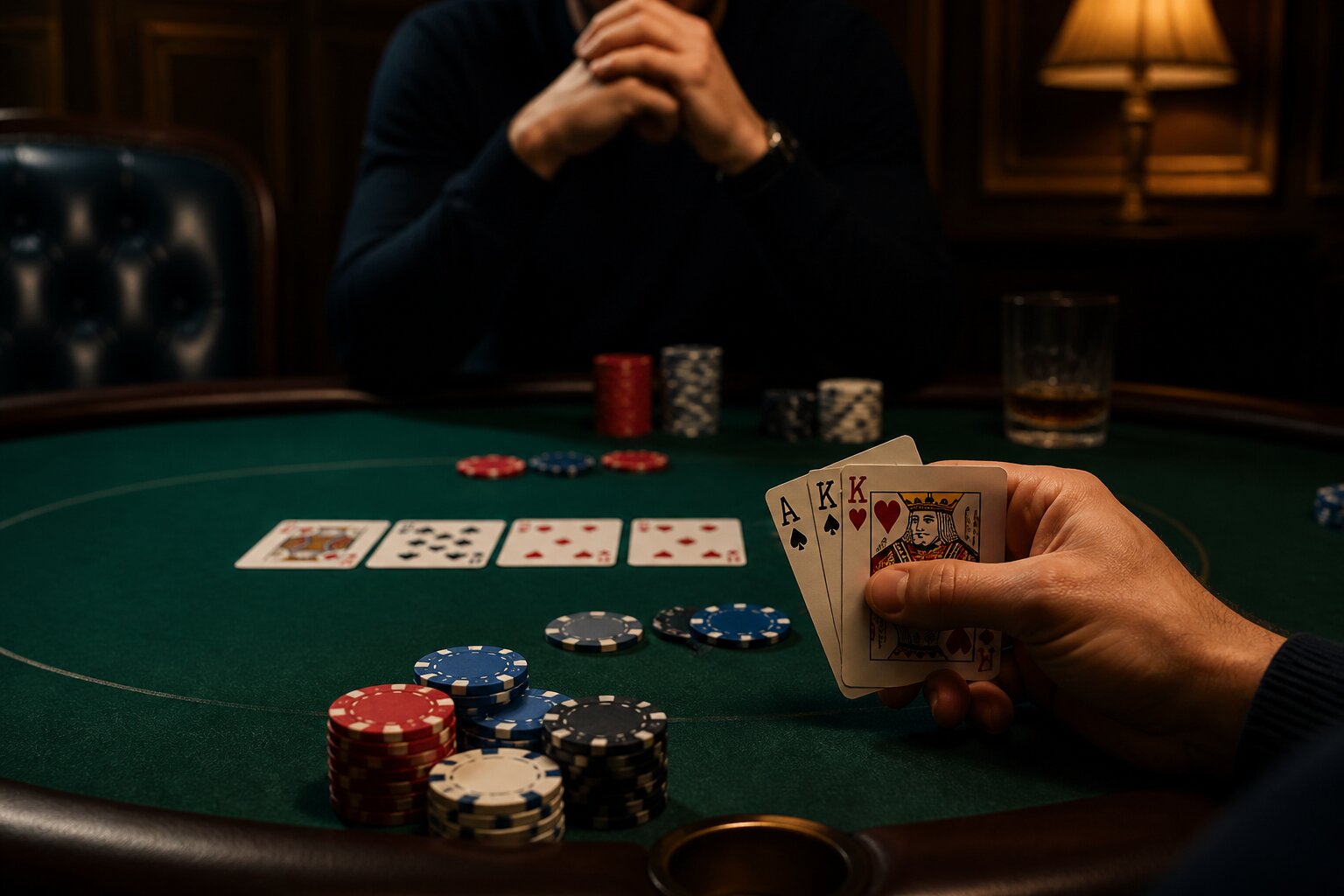
Poker is as much about patterns and observation as it is about the cards you hold. If you’ve ever wondered why some players anticipate moves or spot a bluff, this guide will bring those ideas into focus without overwhelming you.
We’ll cover the most common hands, how table behaviour tends to play out, and what patterns really mean in practice. Read on and you’ll find clearer ways to interpret the flow of a game and make more confident choices at the table.
What Are the Most Common Poker Hands?
Knowing the hand rankings is the first practical step in playing smarter. Each combination sits in a fixed order, and recognising them quickly helps you decide how strongly to act.
The top-ranking hand is the Royal Flush, consisting of ten, jack, queen, king and ace in the same suit. Next comes the Straight Flush, any five consecutive cards in one suit.
Four of a Kind is four cards of the same rank, while a Full House pairs three of a kind with a separate pair. A Flush is any five cards of the same suit that are not in sequence, and a Straight is five cards in sequence regardless of suit.
Three of a Kind, Two Pair and One Pair follow next, each progressively more common in play. If none of these combinations are present, the outcome is decided by the High Card — the single highest card that a player holds.
Recognising these hands quickly at the table and understanding how often they appear will help you judge the strength of your position in any given round.
Differences Between High and Low Ranking Hands
The hierarchy of poker hands never changes, so understanding where your hand sits is essential to good decision-making. Top hands such as Royal and Straight Flushes are extremely rare and generally unbeatable in a single showdown, while Four of a Kind and Full House are still very strong and can turn a hand into a big win.
Middle-ranking hands like a Flush or Straight are often competitive but vulnerable to higher combinations. Lower-ranking hands — Three of a Kind, Two Pair and One Pair — come up more frequently and can win many pots, especially in games with fewer players or more conservative betting.
At the bottom is the High Card. In practice, knowing the difference between these groups helps you weigh risk against potential reward, and guides how aggressive or cautious you should be in each situation.
How to Recognise Table Behaviour in Poker?
Table behaviour is part mannerism, part rhythm, and part the psychology each player brings. Some people are quiet and deliberate; others are more expressive. Common behaviours include changes in bet timing, small gestures with chips or cards, and shifts in posture or eye contact.
These actions can be simple habits or ways to manage concentration. Experienced players learn to separate genuine signs from mere routines, and many deliberately vary their behaviour to avoid being predictable. Observing without overreading will give you the best return: treat behaviours as context rather than proof.
Try to notice patterns over several hands rather than react to a single moment. Doing so makes it easier to spot consistent tendencies that might inform your choices at later stages of a game.
Why Do Players Exhibit Similar Patterns During Games?
Patterns emerge because humans respond in similar ways to comparable situations. Pressure, expectation and the cadence of betting all encourage repeated habits. Players might tighten up after losing several hands, or become more animated after a winning streak; such reactions are natural.
Some behaviours become deliberate tactics: players may adopt a particular rhythm to disguise the strength of their hand or to unsettle opponents. Over time, these approaches can become recognisable patterns that other players notice and factor into their decisions.
Understanding that these tendencies can be both instinctive and strategic helps you read the table more realistically. It also underscores why single observations shouldn’t be relied on in isolation.
Common Table Tells and What They Might Mean
Certain behaviours recur often enough that they’re worth knowing about. Fidgeting with chips, brief glances at cards, variations in bet timing, changes in voice or posture — these can all accompany different mental states. For example, a player who suddenly acts much more quickly than usual may be following a rehearsed plan rather than reacting to a hand.
Yet these signals are ambiguous: similar actions can mean different things for different players. Context matters — previous rounds, a player’s typical style, and the size of the pot all influence what a tell might indicate. Treat these cues as pieces of a broader picture, not definitive answers.
Misconceptions About Behaviour at the Poker Table
One common mistake is assuming that tells are foolproof. In truth, they’re often unreliable because players can mask or manufacture them. Another misconception is that behaviour alone can explain outcomes; it’s just one element among hand strength, betting patterns and table dynamics.
A more useful approach is to combine behavioural observation with an understanding of hand rankings and betting flow. That layered view reduces the chance of being misled by a single gesture or moment.
If you keep that balanced perspective, table observation becomes a valuable tool rather than a crutch.
How Can Spotting Patterns Improve Your Understanding of the Game?
Recognising patterns helps you anticipate common scenarios, assess how opponents react under pressure, and refine your own style. Over time, noticing how certain hands and behaviours frequently interact will make the game feel more predictable in useful ways — not in guaranteeing outcomes, but in improving your choices.
For example, players who consistently fold to big bets may open up opportunities for well-timed raises; those who bluff often may be bluffed back when the situation fits. Spotting these tendencies lets you tailor your responses and build a more adaptable strategy.
Keep your approach measured and consistent, and set a clear budget for play. Responsible boundaries and an emphasis on enjoyment make it easier to learn from patterns without turning the game into a source of stress.
Myths and Misunderstandings About Poker Hands and Behaviour
Poker attracts plenty of myths. One is that certain hands will always win; in reality, even strong hands can be outmatched by better combinations. Another is that tells reliably reveal a player’s cards; as noted earlier, behaviour is often ambiguous and can be manipulated.
Claims about secret systems or guaranteed strategies also circulate widely. No method can promise success on every hand — meaningful improvement comes from studying hand rankings, observing betting patterns, and refining decision-making over time.
Play within the legal limits and age restrictions that apply where you are, and keep play focused on enjoyment and skill development rather than on chasing outcomes. With a measured, informed approach, pattern recognition becomes a tool that adds clarity and satisfaction to your poker experience.
Poker is a game of observation, judgement and adaptation — learn the hands, watch the table, and let patterns guide better decisions while you enjoy the social challenge it offers.
**The information provided in this blog is intended for educational purposes and should not be construed as betting advice or a guarantee of success. Always gamble responsibly.