
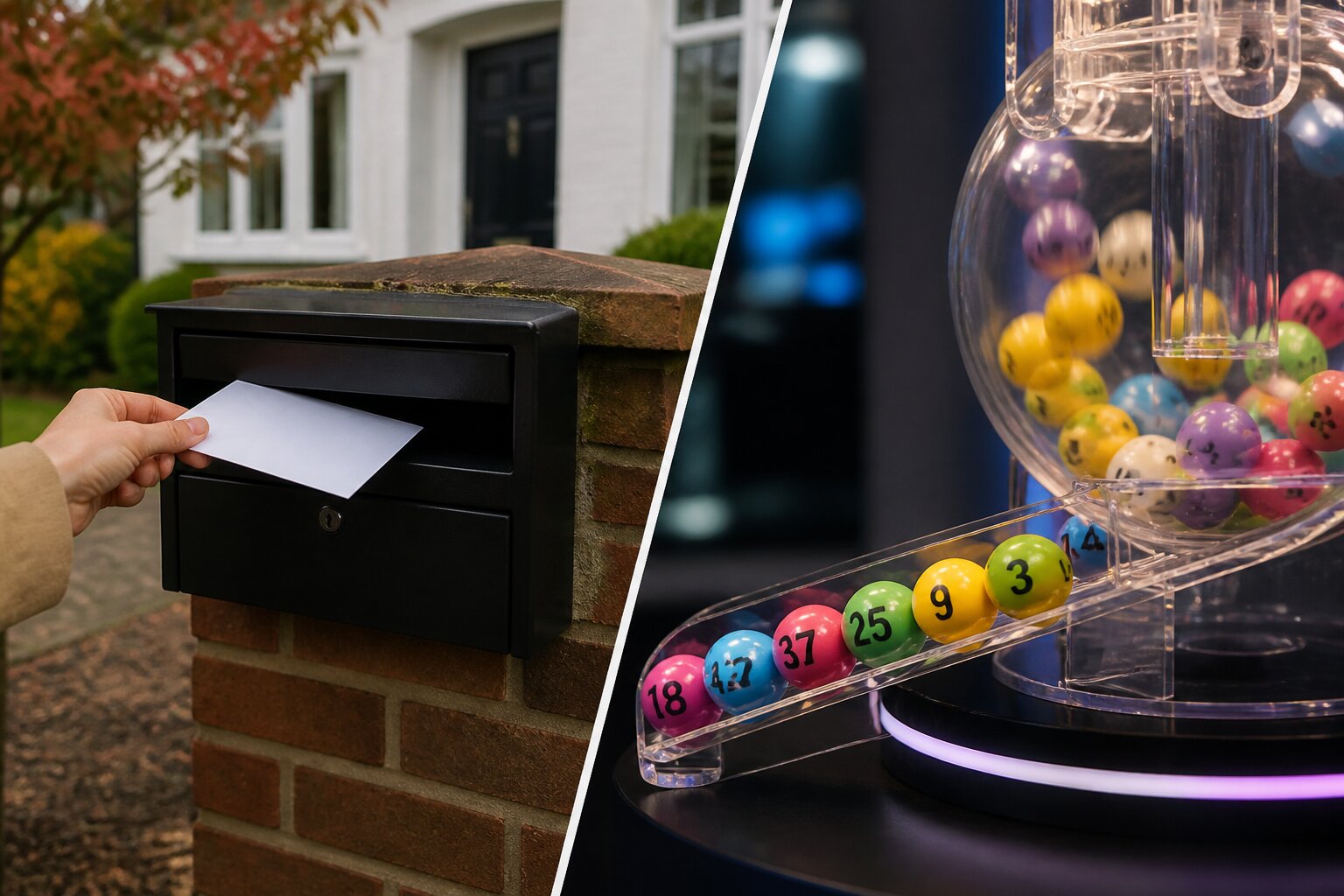
Ever wondered whether the Postcode Lottery or the National Lottery suits you better? Both offer chances to win prizes and support good causes, but they operate in distinct ways. This guide explains how each works, compares costs and prizes, and outlines what you need to take part.
Read on for a clear comparison that helps you decide which format fits your preferences and budget.
How Do the Postcode Lottery and National Lottery Work?
The Postcode Lottery uses a subscription model where your ticket is your postcode. You pay a monthly fee and are entered into the draws covered by that subscription. When a postcode is drawn, all players registered to that postcode share the prize. Draws include regular weekly and monthly events and sometimes include non-cash prizes such as vouchers or holidays.
The National Lottery runs multiple games with separate tickets for each draw. Games include Lotto, EuroMillions and Set For Life. Players choose numbers or use an automatic selection, then buy a ticket for a particular draw. Prizes are awarded according to the specific game’s matching rules and prize tiers.
Both schemes are regulated and distribute a portion of income to good causes. The different entry and prize formats influence cost, how often you play, and the kinds of prizes available. Next, we’ll look at how to enter each lottery in practice.
Entry Methods Explained
Entry procedures reflect each lottery’s structure and frequency of draws. Understanding these differences helps you pick the option that matches how often you want to play and how involved you want to be. It also helps you manage your spending and expectations, as different schemes handle subscriptions, ticket validity and prize claims in different ways.
Entering the Postcode Lottery
Joining the Postcode Lottery involves registering your home postcode and setting up a monthly subscription. Registration usually requires an address and payment details, and some providers may ask for basic identity verification to confirm age and residency. Once the subscription is active, you are automatically entered into the draws included in your plan without buying separate tickets for each draw, and your payments are taken on a regular basis until you cancel the subscription.
You can normally manage your subscription online or by contacting customer services, where you can update payment details, change your postcode entry if you move, or cancel the subscription. Be aware of any notice periods or terms around cancellations so you understand when changes will take effect.
Entering the National Lottery
For the National Lottery you buy individual tickets either online, via an app, or at retail outlets. You select the game and your numbers or opt for a random selection. Tickets are valid for a single draw or for a series of draws if you choose to enter in advance, and online purchases often show your ticket and draw details in your account history.
If buying in person, keep the physical ticket safe because it is needed to make a claim. For online purchases you will usually need to follow the operator’s process to check results and claim prizes, and you may need to verify your identity for larger winnings. Remember that entry is restricted to those who meet the minimum age requirement.
Now that you know how to enter, the next section explains how prizes are decided and what the odds look like for each scheme.
How Are Prizes Awarded and What Are the Odds?
Prize formats and odds differ because of the contrasting structures of the two lotteries. Both use independent draw procedures and published rules so outcomes are clear and verifiable.
In the Postcode Lottery, prizes go to whole postcodes. If your postcode is drawn, all registered players in that area share the prize. The odds of winning any prize depend on how many postcodes are participating in a particular draw. The operator publishes overall odds, which can change as participation varies.
National Lottery games use fixed number matrices and prize tiers. For example, Lotto requires matching six main numbers for the top prize, with long odds for the jackpot and progressively better odds for lower-tier prizes. EuroMillions and Set For Life each have their own prize structures and probabilities. Prize pools and payouts can be influenced by ticket sales and the number of winners in each tier.
These differences shape the likely size and frequency of wins, which leads us into a closer look at how prize money is structured across the two offerings.
Prize Structures Compared
Prize structures reflect how each lottery is built and how winnings are shared among players.
Postcode Lottery Prizes
Prizes in the Postcode Lottery are organised across daily, weekly and monthly draws. Daily draws generally offer smaller cash awards to selected postcodes, while weekly and monthly draws provide larger sums and occasionally include higher-tier prizes that attract more attention. Some special draws raise the maximum prize for particular postcodes, often tied to promotions or anniversary events that temporarily increase the top prize available.
Non-cash awards such as holidays or vouchers may also feature in certain draws, giving a varied prize mix beyond pure cash. Any cash prize is divided among all players in the winning postcode, so individual payouts depend on how many people hold entries for that postcode at the time of the draw. Rules on prize distribution and how non-cash prizes are claimed are set out by the operator and can influence the actual value received by each winner.
National Lottery Prizes
National Lottery games each have defined prize tiers that determine how winnings are allocated. In Lotto, lower-tier wins may include a free ticket for matching two numbers and progressively larger cash amounts for matching more numbers, with clearly stated amounts for each tier. The jackpot starts at set minimums and can roll over if not won, producing larger jackpots over time and increasing interest in the draw.
EuroMillions and Set For Life offer higher top prizes and different payment formats, such as regular payments over many years for the top Set For Life prize, rather than a single lump sum. The ultimate prize values depend on ticket sales and how many winners share each tier, so the advertised top prize can vary according to participation and the number of claims in each draw. Detailed prize breakdowns and payout procedures are published by the National Lottery and are subject to the regulator's rules.
Next, we’ll cover who can take part and any location or age requirements you need to watch out for.
Eligibility and Participation Rules
Both lotteries have clear rules designed to protect players and ensure fairness.
You must be at least 18 to participate. For the Postcode Lottery, play is organised around eligible UK postcodes, so some areas may be excluded for licensing or operational reasons. The National Lottery requires you to be in the UK or Isle of Man when purchasing tickets online, and retailers may ask for identity checks when processing claims.
Operators publish full terms and conditions that explain entry restrictions, payment procedures and how to claim prizes. Providing false information or attempting to play from an ineligible location can lead to entries being voided and prizes forfeited. With eligibility covered, the next practical consideration is how the costs compare.
Costs: Are There Price Differences?
The payment models are among the clearest differences between the two lotteries.
The Postcode Lottery operates on a monthly subscription fee. That recurring charge covers all draws included in the subscription period. The National Lottery uses a pay-per-ticket approach. Prices vary by game and by how many draws a player wants to enter in advance.
Because one model is subscription based and the other is per-ticket, budgeting differs. A subscription can result in predictable monthly spending while the pay-per-draw model gives more control over how frequently you buy tickets. With costs understood, it helps to see where a portion of ticket money goes.
Charity Contributions: Who Benefits?
Both lotteries direct a proportion of ticket income to charitable causes, and they report those allocations publicly.
A significant share of Postcode Lottery income is distributed to charities and community projects across the country, funding areas such as health, environment and education. The National Lottery also allocates a fixed proportion of ticket sales to good causes, distributed by independent bodies to projects spanning the arts, sports, heritage and local community organisations.
Both models aim for transparency about which projects receive funding and how much is given. Having covered charitable impact, the next section helps you weigh which lottery might suit your preferences.
Which Is Right for You?
Choosing between the Postcode Lottery and the National Lottery comes down to personal priorities.
If you prefer a simple, ongoing commitment and like the idea of local sharing of prizes, a postcode subscription may fit better. If you want flexibility to pick games, control how often you play and the option to select numbers, the National Lottery’s pay-per-draw approach may be more appropriate. Consider how much you want to spend, how often you would enter and whether you favour community-based prizes or nationwide draws.
Think about the differences in entry, prize formats and budgeting before deciding. If you have a clear view of those preferences, you can make a choice that aligns with your routine and finances. The final section offers guidance on keeping your participation safe and balanced.
How to Enter Safely and Responsibly
Taking part should be a controlled activity that fits your broader finances and wellbeing.
Set a firm spending limit and keep a simple record of entries so spending stays within that boundary. Make use of account controls offered by operators if you use online services, such as deposit caps or temporary suspension tools. Never treat lottery play as a financial strategy or a way to solve money worries.
Ensure you comply with the age and location rules when entering. If gambling behaviour becomes hard to manage or causes harm, confidential support is available from specialist organisations. Prioritising wellbeing and clear limits helps keep participation comfortable and within your means.
**The information provided in this blog is intended for educational purposes and should not be construed as betting advice or a guarantee of success. Always gamble responsibly.