
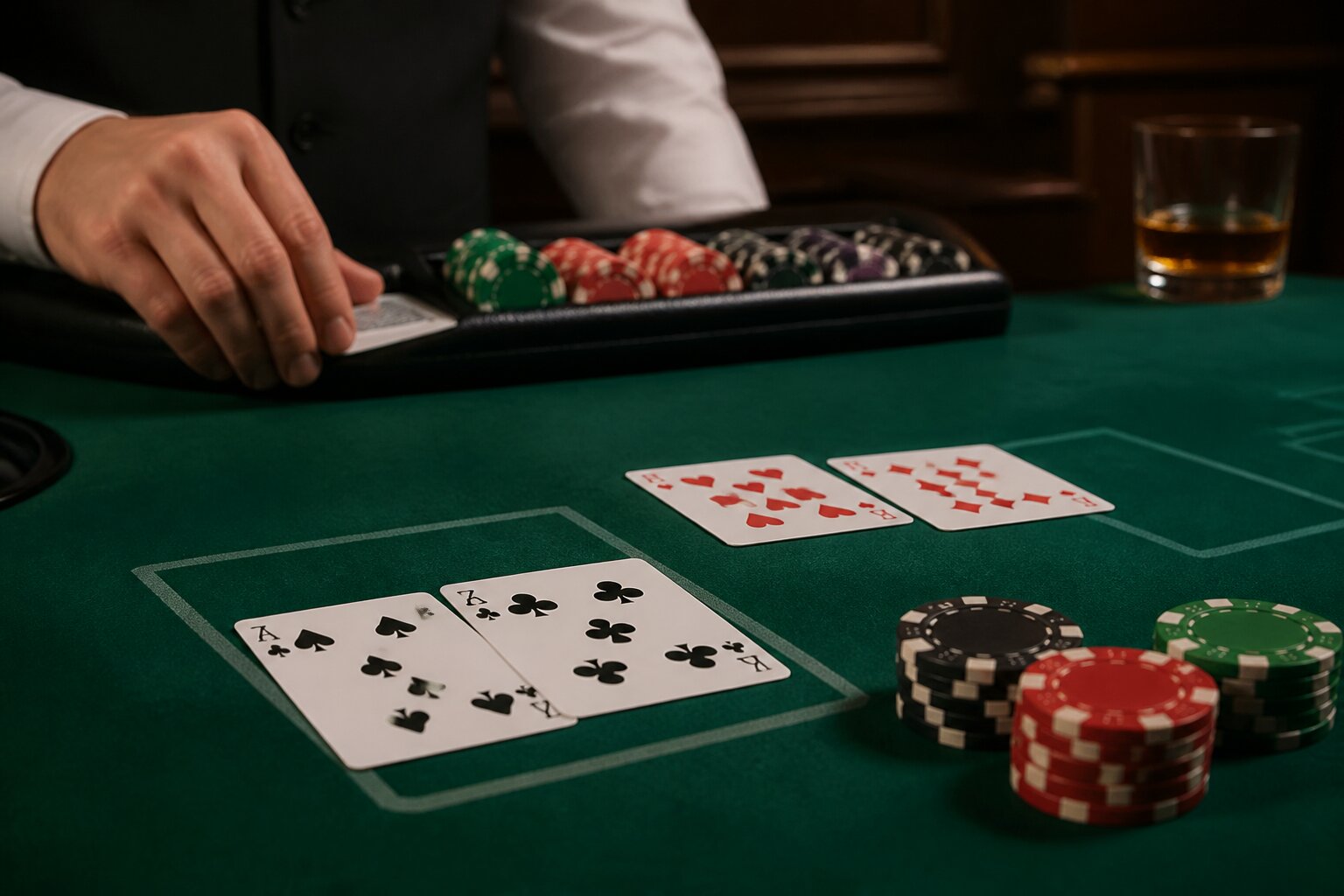
Fancy adding a bit of extra excitement to your next blackjack game? The 21+3 side bet lets you use your two cards plus the dealer’s upcard to form a three-card poker hand and win an additional payout if those cards match certain combinations. Suited trips are the most rewarding of these outcomes, and we will explain why they stand out.
This article explains how the 21+3 side bet works, when payouts are decided, the typical odds and returns, the advantages and drawbacks to consider, and how to place the bet at tables and online. Read on to learn how suited trips fit into the bigger picture of side bets.
How Does the 21+3 Side Bet Work in Blackjack?
You place a 21+3 side bet at the same time as your main blackjack wager, usually in a marked area on the table or via a separate button in an online interface. After the deal, the player receives two face up cards and the dealer shows an upcard. The side bet is evaluated from those three cards as if they formed a three-card poker hand.
Qualifying combinations include flushes (three cards all the same suit), straights (three consecutive ranks in any suits), three of a kind (three cards of the same rank), straight flushes (three consecutive ranks in the same suit) and suited trips. Suited trips consist of three cards of the same rank and the same suit, for example when multiple decks are in use you could see 7 of spades from both a player and the dealer plus another 7 of spades, making suited trips very rare and typically the top payout.
The side bet is resolved independently of the main blackjack hand. Whether the main hand wins, loses or pushes has no effect on the 21+3 result. Payouts vary by casino and table rules; suited trips usually carry the largest return. If you want to know how payouts are applied in practice, the next section explains when the bet is paid out during a round.
When Are 21+3 Side Bets Paid Out?
Payouts for the 21+3 wager are determined immediately after the initial three cards are visible, and this happens before any further play on the blackjack hand commences. Once the player’s two cards and the dealer’s upcard are dealt, the dealer or the game software checks whether those three cards form a qualifying poker combination and pays winners on the spot.
If the three cards make a flush, straight, three of a kind, straight flush or suited trips, payment is made according to the table’s payout schedule. If no qualifying hand is present, the side bet is collected. This instant settlement means the excitement or disappointment of the 21+3 result is resolved at the start of the round, leaving the rest of the hand to proceed normally.
Knowing when payouts occur helps you follow the action at the table and decide how the side bet fits into your session. With that timing clear, it is useful to understand the actual odds and typical returns for each outcome so you can weigh the risk and reward.
What Are the Odds & Payouts for 21+3 Side Bets?
The 21+3 side bet uses fixed payouts but the probabilities of each winning combination are small, so the overall house edge is higher than on the main blackjack game. Exact figures depend on the number of decks and the specific payout table, but the following gives a representative picture based on common multi-deck games.
Typical payouts and approximate probabilities are:
- Suited trips (same rank and same suit): commonly pays 100:1. Probability roughly 0.02% or about 1 in 5,000 hands in a multi-deck game.
- Straight flush (consecutive ranks, same suit): commonly pays 40:1. Probability roughly 0.2% or about 1 in 460 hands.
- Three of a kind (same rank, suits may differ): commonly pays 30:1. Probability roughly 0.6% or about 1 in 160 hands.
- Straight (consecutive ranks, any suits): commonly pays 10:1. Probability roughly 3.2% or about 1 in 31 hands.
- Flush (same suit, any order): commonly pays 5:1. Probability roughly 5% or about 1 in 19 hands.
Because these winning events are infrequent, the house edge for 21+3 typically sits between about 3% and 8% depending on deck count and specific payouts. That means over many rounds the expected return is below even money compared with standard blackjack play, where skilled basic strategy keeps the house edge much lower. The high variance of side bet results produces occasional large wins but extended stretches of losses, so understanding the odds will help set realistic expectations.
With the payout structure and probabilities in mind, the next section considers practical pros and cons so you can judge whether the gamble is worth the thrill.
Pros & Cons of Playing 21+3 in Blackjack
The main appeal of 21+3 is that it turns the opening cards into an immediate opportunity for a single, larger payout, which can make the first moment of each round more engaging. A modest side stake can produce a substantial headline payout when a top combination appears, and the bet adds a poker-like element without changing how you play your main hand.
On the downside, the math favours the house more strongly than in standard blackjack. The low probability of high payouts and the higher house edge mean that players who make 21+3 wagers regularly should expect greater long-term losses than those who stick solely to the main game. The side bet does not respond to skillful decisions in blackjack; it is resolved on the initial three cards, so strategic adjustments to the main hand do not affect it.
Variability in payouts and the potential for rapid bankroll swings are important considerations. If entertainment value and the possibility of occasional large payouts are the priority, the side bet can add excitement. If steady, lower-variance play is the goal, the extra wager is likely to be an inefficient use of funds. The next section discusses how to decide whether the bet suits your play style.
Are 21+3 Side Bets Worth It?
Whether 21+3 wagers are worth playing depends on personal goals. For players who value occasional dramatic payouts and enjoy extra variety, a small, controlled side bet can be an enjoyable addition to a session. For those focused on minimising the house edge and playing for steady returns, the higher expected loss of 21+3 makes it unattractive.
It helps to think of the side bet as entertainment with a price. Since the result is decided immediately and independently, placing a modest stake limits exposure while preserving the thrill of a potential big payout. Many players choose to reserve such side bets for segments of play where they are prepared to accept higher variance.
Whatever the choice, set limits and keep the side bet proportionate to the rest of the bankroll. Responsible play and clear boundaries help ensure the addition remains fun rather than costly.
How to Place a 21+3 Side Bet at UK Casinos
Placing a 21+3 wager is straightforward in both land-based and online settings, and must be done before the cards are dealt. At a table game, add chips to the marked 21+3 area on the felt when bets are being taken. Online, activate the side bet using the separate control or betting area before the deal begins.
After the initial deal, the side bet is checked and paid or collected immediately, while the main blackjack hand continues to resolution. When playing at venues regulated in the UK, customer protections such as age checks, secure payments and clear information about game rules are standard. That regulatory oversight helps ensure the side bet is offered and settled transparently.
If you want to try 21+3, use a small, clearly defined portion of your budget so the extra gamble stays an occasional entertainment rather than a regular cost.
Final note: suited trips and other 21+3 results bring a different tempo to the start of each hand, so whether you try them or not, being informed about how they work will make your blackjack sessions more engaging and predictable.
Play Popular Online Casino Games at Cozino
Ever feel like switching things up and enjoying some top-quality online entertainment? At Cozino, we’re always happy to welcome new faces who fancy a bit of fun with us.
Setting up couldn’t be more straightforward – just create an account, make a deposit and you’ll be ready to play. We look forward to having you with us!
**The information provided in this blog is intended for educational purposes and should not be construed as betting advice or a guarantee of success. Always gamble responsibly.