
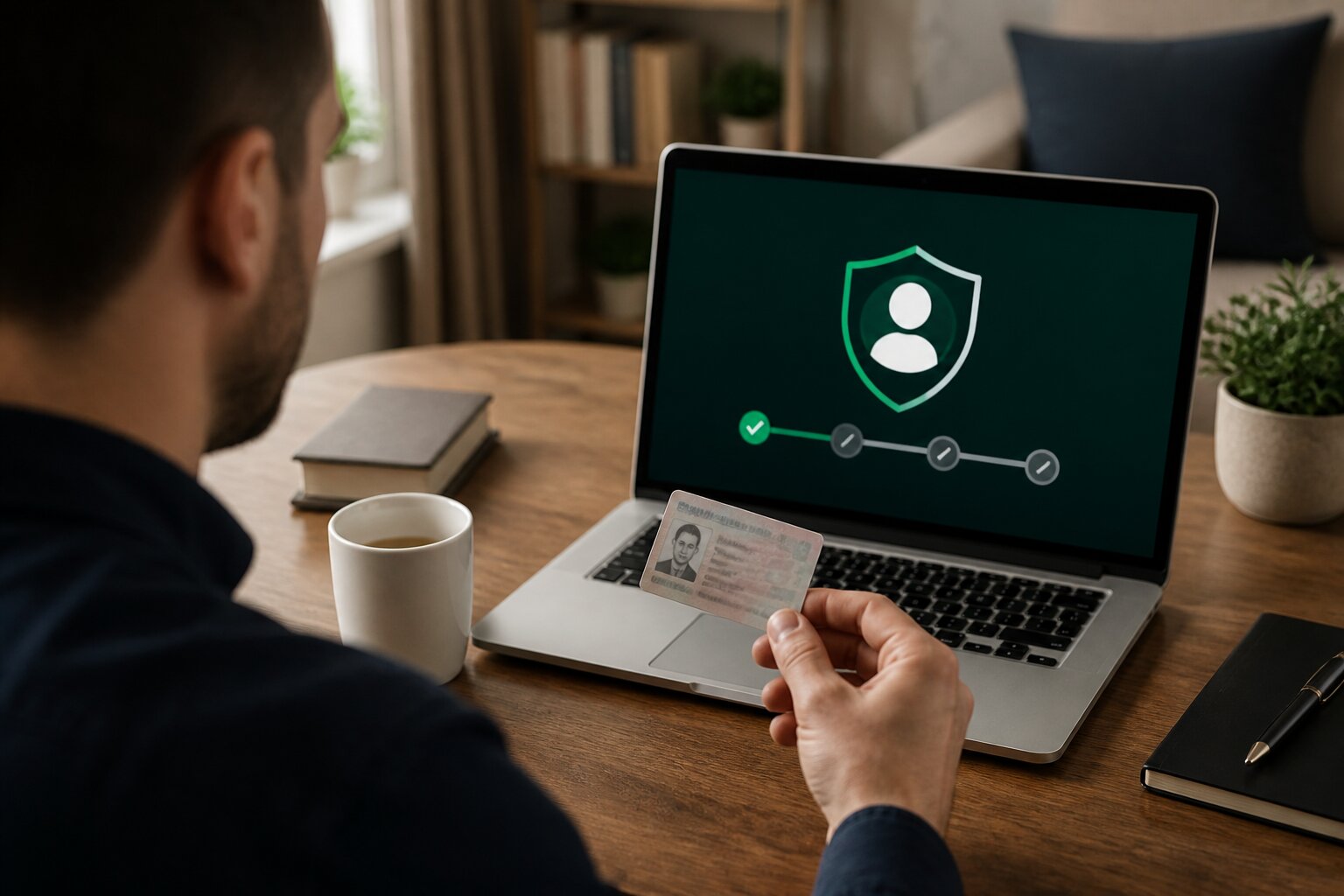
Ever wondered why online casinos ask for ID when you sign up or try to withdraw funds? It can feel frustrating at first, especially if you just want to start playing.
There are clear reasons behind the checks, and understanding them makes the process quicker and less worrying.
Below we explain what verification involves, what documents are commonly requested, and how the checks protect both players and operators.
Why Is Account Verification Required in Online Casinos?
Account verification is a legal and regulatory requirement for online gambling operators. The checks have several distinct purposes.
They confirm you are at least 18, which prevents underage access. They also help prevent identity theft and other types of fraud by ensuring accounts are linked to real, verified people.
A further reason is to prevent the use of gambling services for moving illicit funds. Anti-money laundering safeguards are a central part of the rules that govern the sector, so operators must collect and check certain personal details.
These obligations mean verification is a standard part of using any regulated casino. Knowing this makes it easier to see why the process is in place and why operators ask for specific documents.
Understanding the Online Casino Verification Process
Verification usually follows a predictable path, and most of the time it’s straightforward.
After you register, the operator will ask for basic personal details such as your name, address and date of birth. These allow the operator to match the information you supplied with the documents you send.
Next, you provide documents that prove your identity and your address. The operator will check these against the details on your account using secure systems and trained staff. If something is unclear — for example, a photo is unreadable or an address is missing — they will tell you what needs to be corrected.
The length of the process varies. If your documents are clear and current, verification can be completed quickly. If additional checks are needed, the operator will inform you and explain what’s required.
If you read on, the next section explains the specific documents that are usually accepted so you can prepare them in advance.
What Documents Are Needed for Casino Account Verification?
Operators typically ask for one form of photographic ID and one proof of address.
Photographic ID examples include a valid passport, a driving licence, or an official national ID card. The image, name and expiry date should be clearly visible.
Proof of address might be a recent bank statement, utility bill or a council tax notice. These documents are usually required to be dated within the last three months and must show your full name and home address.
Ensure documents are genuine, complete and not cropped. Blurred scans or photos with glare are often rejected, which slows the process. Providing clean, readable images the first time reduces the chance of delays.
How Does ID Verification Protect Players and Casinos?
Verification reduces several risks for everyone involved.
By confirming identity, operators ensure withdrawals are paid to the rightful person and accounts can’t be controlled by impostors. That directly protects your funds and personal details.
Checks also make it harder for criminals to misuse gambling services for financial crime. When unusual activity is flagged, operators can act quickly, which benefits the whole user base.
There are also safeguards to support customers who need them. Verification helps operators apply appropriate account controls where required, which contributes to safer play overall.
With those protections explained, the next section describes how verification relates to withdrawals so you know what to expect when you request funds.
Can Account Verification Affect Withdrawals?
Yes — most operators require full verification before processing withdrawals. This ensures funds are sent to the verified account holder and meets regulatory expectations.
If verification is complete, withdrawals will be handled in the usual timeframes for the chosen payment method. Different methods often have different processing times, so once verified you should expect the normal timings for card payments, e-wallets or bank transfers to apply.
If checks are outstanding, the operator must complete them before releasing funds, and they will inform you what’s still needed. Failing to provide requested information can lead to further delays or temporary account restrictions until the matter is resolved.
Timely responses and clear documentation from you help minimise any waiting time. Preparing documents in advance and submitting readable copies is the simplest way to avoid hold-ups when it comes to cashing out.
Common documents operators may request include:
- Government-issued photographic ID, such as a passport or driving licence.
- Proof of address, like a recent utility bill or bank statement dated within the required timeframe.
- Proof of payment method, for example a photo of the front of a debit card (with middle digits masked) or a screenshot of an e-wallet account.
Operators may also carry out additional security or anti-money laundering checks on larger withdrawals, linked accounts or unusual activity. They must keep you informed of what is required and you should receive clear instructions on how to complete any outstanding checks.
Common Concerns and Misconceptions About Casino ID Checks
Many people worry about privacy and how their documents will be handled, and those concerns are reasonable. It helps to remember that identity checks are part of regulatory requirements designed to keep everyone safe and to prevent fraud.
Operators are required to protect customer data and use secure technology to store and process documents. Typical measures include:
- restricted access so only authorised staff can view documents
- secure storage and encryption to prevent unauthorised access
- retention and deletion policies that limit how long documents are kept
- staff training and audit trails to ensure procedures are followed
Access is restricted, and information should not be shared outside of authorised processes. Where data is shared with third parties, such as fraud prevention services, this should be explained in the operator's privacy policy and carried out under lawful, transparent grounds.
Another frequent worry is speed. While some cases require extra checks, the majority of straightforward submissions are processed quickly. If a document is rejected, operators typically explain why and what you can provide instead, for example a clearer photo, a different document type, or additional proof of address.
If you encounter repeated problems, asking support for a clear list of acceptable documents often resolves the issue sooner. Being prepared with readable copies and matching details on your account reduces delays and makes the process smoother for everyone.
Tips for a Smooth Online Casino Verification Process
A little preparation makes verification quicker and less stressful. Below are practical steps that help the operator complete checks without delay.
Before you upload anything, check that the details you entered when signing up match those on your documents. Even small differences can prompt extra checks.
Take clear, well-lit photos or scans of each document so names, dates and addresses are readable. Avoid editing or cropping images that remove important information.
Upload the documents promptly when requested and respond quickly if the operator asks for clarification. Fast cooperation reduces waiting times for both verification and any pending withdrawals.
Remember that verification is part of maintaining a safe service. Use the operator’s account controls and support features if you need limits or other protections.
By following these points you help the process move smoothly and contribute to a secure environment for everyone.
By understanding what verification involves and preparing the right documents, the checks will feel less intrusive and far more predictable — letting you move on once everything is complete.
**The information provided in this blog is intended for educational purposes and should not be construed as betting advice or a guarantee of success. Always gamble responsibly.