
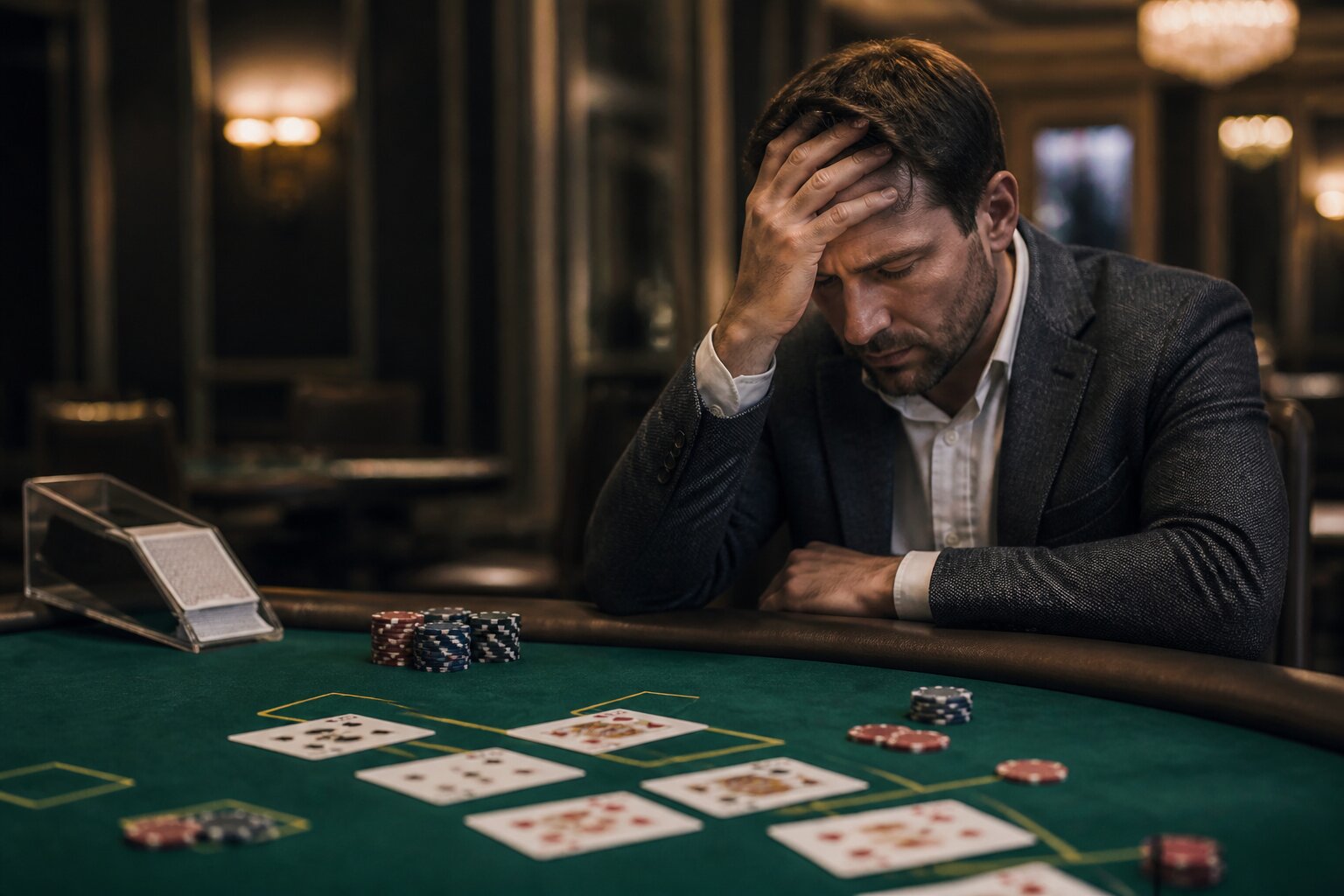
Blackjack is one of the most popular casino games around because the rules are straightforward and the decision-making feels engaging. Even skilled players, though, will sometimes face strings of losses that leave them wondering what’s going on.
If you’ve ever sat through a run of several defeats and felt baffled by how often it happened, this article breaks down the maths and the psychology behind those runs, and explains what players can reasonably expect at the table.
Curious whether long losing sequences are an unusual event or simply part of playing blackjack? Read on to see the figures and practical context that bring clarity to the topic.
Understanding Losing Streaks in Blackjack
A losing streak in blackjack just means losing consecutive hands — for example, three losses in a row is a three-hand streak. Players can encounter runs of varying lengths, and that repetition often feels striking because of how quickly results pile up in a session.
Crucially, these sequences stem from probability and variance rather than any mystical force. Each hand results from the shuffled cards and the rules in play, so clusters of wins or losses are an expected feature of short-term play. Even when decisions follow basic strategy precisely, streaks will still occur because outcomes are statistical events, not guarantees.
Recognising that consecutive defeats are built into the game helps keep expectations realistic and prevents players from misreading what those runs signify. With that in mind, the next section looks at just how often these streaks turn up and what the numbers look like.
How Often Do Consecutive Losses Occur in Blackjack?
Losing streaks are more common than many players assume. With basic strategy, the probability of losing a single hand typically sits a little under 50% — often in the high 40s when standard rules apply. Multiplying that single-hand probability by itself gives the chance of back-to-back losses.
For example, if the chance of losing one hand is 48%, the chance of losing three in a row is about 0.48 × 0.48 × 0.48, which equals roughly 11%. That level of occurrence means three-loss stretches show up regularly during ordinary play. Longer streaks become rarer but are still entirely possible: a five-hand losing run might occur in the low single-digit percentages, so players will encounter them from time to time over many hands.
Different rule sets and the game’s house edge nudge these numbers up or down slightly, and the next subsection explores how those rule variations change the picture.
Streak Probability Based on House Edge and Game Rules
Small differences in rules—such as how much blackjack pays or whether the dealer hits on soft 17—shift the house edge and therefore the chance of losing any given hand. If the probability of a single loss rises from 48% to 49% because of less favourable rules, then a three-hand losing streak increases from about 11% to around 12%. That may seem minor on a single occurrence, but it matters over many hands and many sessions.
Higher house edge doesn’t create streaks; it merely alters the baseline odds, so streaks of a particular length will be marginally more or less frequent depending on the variant being played. The core idea remains: rules change the numbers, but they do not change the fundamental fact that sequences of results are a normal feature of the game.
The Role of Short- and Long-Term Variance
Variance describes the natural fluctuation in results over short runs versus the longer term. In brief sessions you will see wide swings — clusters of wins and clusters of losses — while over large numbers of hands the average result tends to align more closely with the underlying house edge.
Skillful play can reduce the house edge, but it cannot eliminate variance. Even seasoned players and card counters experience extended downswings simply because random distributions produce runs. With that context, the next section looks at common misunderstandings that make streaks feel stranger than they are.
Common Misconceptions About Losing Streaks
Players sometimes form mistaken beliefs about losing streaks that lead to poor choices and misplaced expectations. Clearing up these myths helps keep decision-making calm and evidence-based.
Are Losing Streaks Really Rare?
Many players assume that losing several hands in a row is unusual or that a long sequence must indicate a problem with the game or the table. In reality, streaks of three, five or more lost hands occur with predictable frequency once the probabilities are understood. A three-loss sequence, for instance, is expected roughly once every nine or ten attempts if each hand has about a 48% chance of loss. Even five-loss runs will turn up occasionally during routine play.
Why Streaks Can Feel Unusual But Aren't
Streaks feel especially notable because people remember unpleasant experiences more vividly than neutral or positive ones. This distortion makes losing runs loom larger in memory, while routine winning sequences do not stick as strongly. Another common trap is the Gambler’s Fallacy — the belief that past outcomes alter the odds of future, independent hands. Each hand remains an independent event governed by the shuffled deck and the game rules, so there is no built-in “due” response to a series of losses.
Understanding these psychological tendencies reduces the chance of emotional decisions; the next section examines the actual causes behind extended downswings in more detail.
What Causes Extended Losing Streaks?
Extended losing runs arise from a mixture of probability and player behaviour. The dominant factor is the inherent randomness of card distribution, but choices made at the table can influence how damaging a streak becomes. Understanding both elements helps players keep perspective and manage their play more responsibly.
The Influence of Random Chance
Random chance is the engine behind sequences of results. Over short stretches, deviations from the long-term average are normal: a run of six or seven consecutive losses can occur without any strategic error. Because every hand originates from the shuffled deck and is independent of prior hands, clustering of outcomes is an expected statistical phenomenon rather than evidence of anything unusual.
This independence of hands means that past outcomes do not predict future ones. Players often attribute meaning to patterns that are simply random, which can lead to misplaced confidence or unnecessary concern. Recognising that streaks are a product of probability makes it easier to accept them as part of normal play rather than as a sign that the game has become unfair or that a system has failed.
Player Choices and Betting Patterns
While randomness creates streaks, player decisions shape their practical effect. Strategic errors — such as splitting tens, standing in situations where hitting is advised by basic strategy, or otherwise deviating from correct plays — increase the likelihood of losses and can lengthen or deepen a downswing. Good fundamentals will not remove variance, but they reduce avoidable losses and improve the chance of recovering from a run.
Betting behaviour matters too: increasing stakes during a losing run does not alter the sequence itself but magnifies its financial impact. Chasing losses by raising bets often depletes the bankroll faster and can create additional stress. Keeping bets consistent and commensurate with the bankroll reduces exposure and keeps swings manageable, supporting more sustainable, controlled play.
With a clearer sense of causes, it’s helpful to consider how streaks influence the experience at the table and what that means for a player’s approach. Recognising the roles of chance and choice can lead to calmer decisions, better bankroll management and a healthier attitude to risk.
How Losing Streaks Affect Your Blackjack Experience
A string of losses affects both emotions and finances. As defeats accumulate, confidence can drop and stress may rise, making calm decision-making harder. From a monetary perspective, consecutive losses can deplete a bankroll quickly if bets are large or increased during the run.
These consequences often prompt players to chase losses by raising stakes, which typically worsens outcomes because volatility increases alongside the chance of larger defeats. Keeping bet sizes modest relative to available funds supports steadier play and reduces the pressure that emerges during a downswing. The next section offers ways to recognise when a downswing is happening and how to respond constructively.
Recognising and Managing Downswings
Recognising a downswing means noticing that losses are happening more frequently than usual and that they are affecting mood or finances. Responding calmly helps preserve the bankroll and keeps play enjoyable. Practical measures include setting and respecting a budget, using account controls available through most operators to limit deposits and session time, and taking breaks to reset emotionally.
Keeping a record of sessions can reveal whether decisions or patterns are contributing to extended losses, and sharing concerns with trusted friends or professional support services can be wise if gambling stops being enjoyable. If play becomes stressful, confidential help is available from specialist organisations such as GamCare and BeGambleAware.
- Set a clear budget before playing and avoid increasing it to try to recover losses.
- Use deposit limits, loss limits and session reminders where available to help stay within plan.
- Take breaks during sessions to keep decisions objective and avoid emotionally driven bets.
- Log sessions to spot patterns in play that might be contributing to downswings.
- Seek support if gambling becomes a source of stress rather than entertainment.
These steps help manage the impact of streaks so the focus can remain on making sound decisions and enjoying the game within personal limits.
The mathematical reality is that streaks will occur; understanding their likelihood and effects makes them easier to accept and manage, so players can continue to play with clearer expectations and better control.
Play Casino Games Online at Cozino
We’re delighted to welcome you to our site, where you can enjoy exploring a wide range of casino games in a friendly and relaxed environment. It’s all about enjoying the excitement at your own pace with us.
Getting started is simple — just create an account, make a deposit, and you’re ready to play. We look forward to seeing you at the tables and wish you a great experience!
**The information provided in this blog is intended for educational purposes and should not be construed as betting advice or a guarantee of success. Always gamble responsibly.